In late July, the sky above Mertasari Beach in Sanur changes color. Not because of the sunset, but because thousands of kites take flight at once. This year, Rare Angon Festival Sanur returns from July 23 to 26, 2026, bringing participants from 23 countries to fly kites alongside Balinese residents.
This festival is far from an ordinary kite-flying event. It features 105 international kites in various shapes and sizes, alongside roughly a thousand traditional Balinese kites that local residents fly together in unison. This combination turns the Sanur sky into a giant canvas for four straight days.
Rare Angon Festival Sanur, Bali’s Busiest Sky Stage
The name Rare Angon comes from a shepherd figure in Balinese belief, one residents believe can summon the wind. This philosophy ties closely to the old farming tradition of flying kites to chase pests away from rice fields, while honoring Sang Hyang Rare Angon through the sacred Tumpek Kandang holy day.
A tradition that once served a practical purpose in the fields has now grown into a major cultural festival. Rare Angon Festival Sanur brings that meaning back to life, showcasing traditional Balinese kite types like bebean, pecukan, and janggan, each rich with philosophy, alongside modern creations from other countries.
Traditional Balinese Kites Meet Global Creations
The first day of the festival brings international kite flying, running from 10 a.m. until late afternoon. Participants arrive from countries like Italy, the Netherlands, Sweden, Australia, and Japan, bringing kite designs far different from Balinese style. At night, LED-lit kites take over, lighting up the dark sky accompanied by live music.
The third and fourth days focus on traditional Balinese kite competitions, while the international session shifts location to Muntig Siokan. This shift in focus gives each festival day its own distinct character, rather than repeating the same event for four straight days.
A festival as large as Rare Angon serves as a reminder that Bali cultural preservation isn’t only about national-scale events. The same spirit also grows at a much smaller level, like the habit of village residents who keep tending to their own kite traditions.
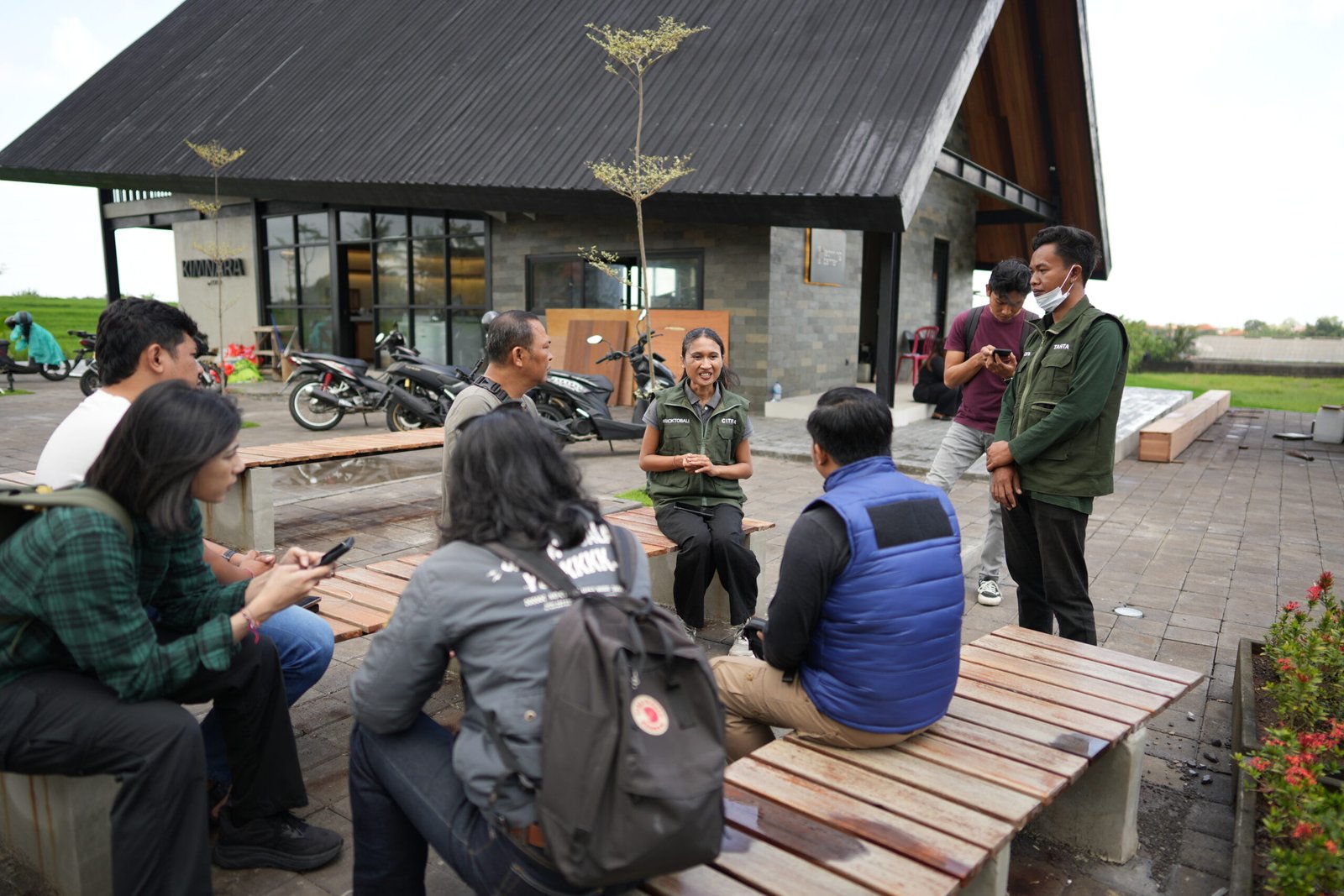
COCO Social Fund, a social foundation in Bali focused on plastic waste-to-fuel processing and environmental education, takes notice of moments like this. Not long before Rare Angon Festival Sanur took place, teenagers from Cepaka Village had already built their own giant kite at Cepaka Learning Center. These two activities run separately, yet both show how kite tradition stays alive across different layers of Balinese society, from a small village to an international stage.
An Opportunity for CSR Programs in Bali From a Festival This Big
An international festival like Rare Angon also draws attention from companies looking for CSR programs in Bali with wide exposure. Partnering with a cultural festival like this can become a fresh way to support tradition, while reaching tourists from dozens of countries who travel directly to Sanur.
This kind of support also aligns with building a broader community that cares about Bali’s environment and culture, one that isn’t limited to a single village or a single group.
Rare Angon Festival Sanur proves that one simple tradition, flying a kite, can unite dozens of countries under the same sky. From Mertasari Beach to a small yard in Cepaka Village, the spirit of protecting Balinese culture keeps growing everywhere, as long as someone is willing to nurture it from one generation to the next.