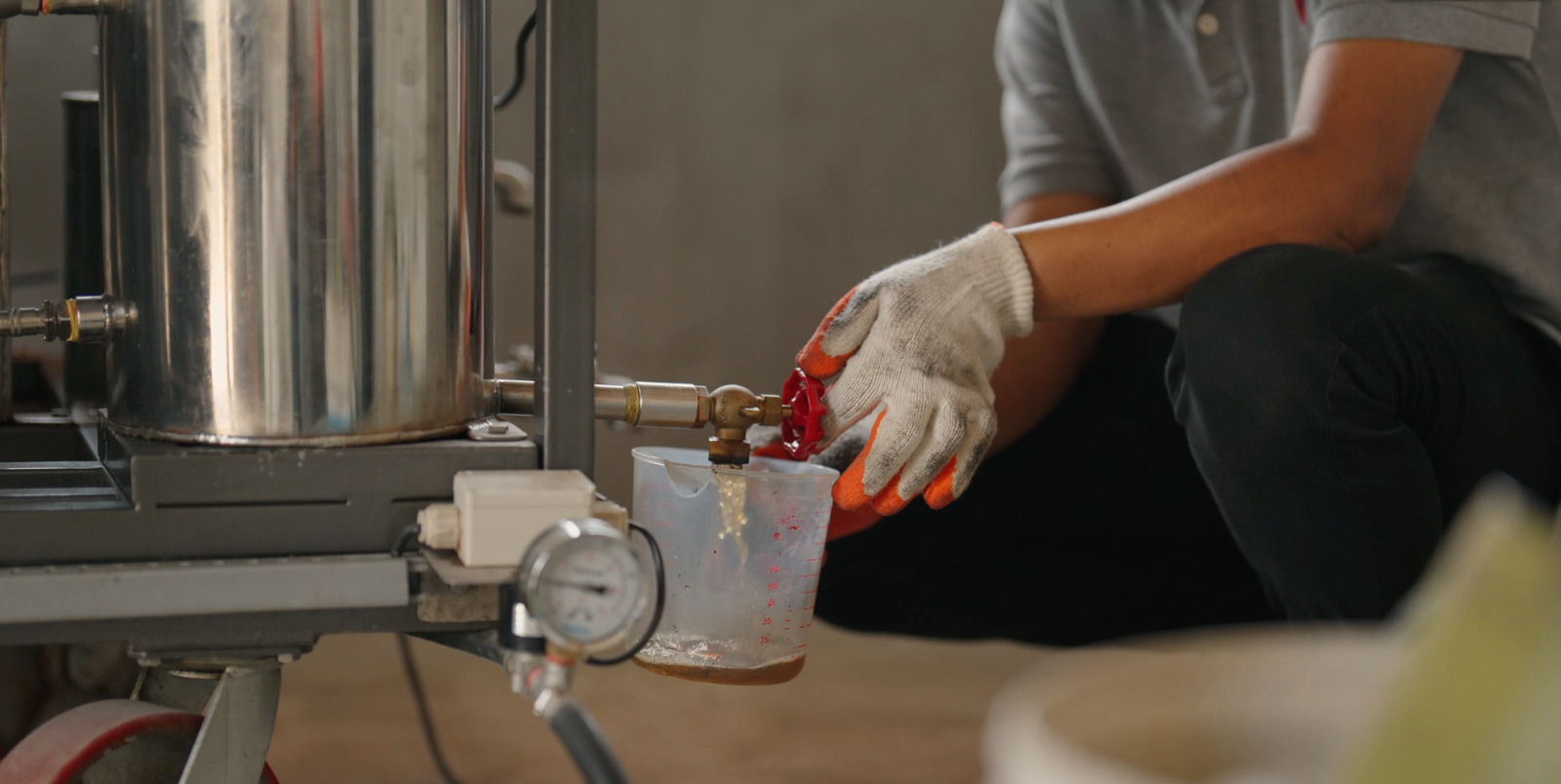
Not every piece of plastic waste belongs in a pyrolysis machine. Pick the wrong plastic type, and the oil output shrinks, the quality drops, or the machine itself can take damage. That’s why understanding plastic types suitable for pyrolysis becomes a step nobody should skip before plastic waste enters the processing stage.
Plastic Types Suitable for Pyrolysis, Not Everything Gets In
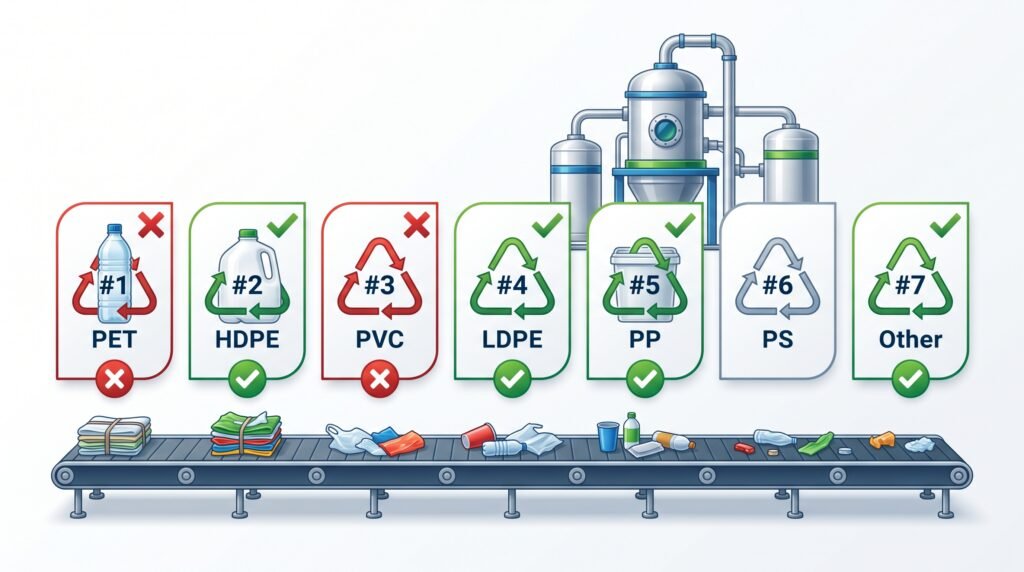
Out of the seven plastic types we encounter daily, pyrolysis operators always sort out two of them before the process begins: PET (#1) and PVC (#3). There’s a clear reason behind this. Both types can make the pyrolysis process fall short of its potential, and even risk damaging the machine.
Why Does Sorting Plastic Matter?
Proper waste management doesn’t mean processing every plastic type the same way. Each type carries a different chemical structure, and that difference directly affects how much oil the process yields, as well as how safe the process stays for the pyrolysis machine.
PET and PVC, Two Plastic Types Always Kept Separate
PET (#1), High Resale Value But Low Oil Yield
PET, or Polyethylene Terephthalate, commonly shows up as mineral water bottles, drink bottles, sauce bottles, and cooking oil bottles. At first glance, this plastic type looks like a good fit for pyrolysis. In reality, PET produces a very small amount of oil when heated through this process.
Another reason PET stays out of the pyrolysis machine comes down to its resale value, which remains fairly high. This plastic type fits better as textile fiber, new bottles, or various other recycled products, options that turn out more profitable than processing it into fuel.
PVC (#3), Contains Dangerous Chlorine
PVC, or Polyvinyl Chloride, commonly appears in PVC pipes, electrical cables, hoses, and certain plastic labels. Unlike PET, the reason PVC gets banned from pyrolysis has more to do with process safety itself.
PVC contains chlorine. When heated, this content can release corrosive gas that damages machine components, lowers the quality of the resulting oil, and requires a special emission control system to keep the surrounding air from getting contaminated. This risk leads pyrolysis operators to keep PVC away from their list of raw materials more often than any other type.
Plastic Types Suitable for Pyrolysis
If PET and PVC both need to stay out of the pyrolysis machine, the question becomes clear: which plastic types actually fit this process?
HDPE, LDPE, PP, and Other, a Combination That Yields More Oil
The following four plastic types serve as the main raw material in the pyrolysis process:
- HDPE (#2), commonly found in bottle caps, shampoo bottles, and soap bottles.
- LDPE (#4), such as plastic bags and plastic wrap.
- PP (#5), showing up as plastic straws, plastic cups, and food containers.
- Other (#7), covering multilayer packaging like sachets.
These four plastic types produce far more oil than PET, while carrying none of the chlorine risk that comes with PVC. Their chemical structure stays simpler, which lets the heating process without oxygen break their molecular chains apart more efficiently.
A Bali Social Foundation That Sorts Plastic Carefully
COCO Social Fund, a social foundation in Bali focused on plastic waste-to-fuel processing, runs this sorting process as part of its standard operating procedure. Before plastic waste enters the pyrolysis machine, the team separates the suitable plastic types from the unsuitable ones first.
This kind of care matters for getting the best final result, both in terms of how much oil the process yields and how safely the machine runs day to day.
CSR Programs in Bali That Prioritize the Right Process
Understanding plastic types suitable for pyrolysis also matters to companies looking for CSR programs in Bali with clear operating standards. Transparency about a process like this helps potential partners see that the plastic waste-to-fuel program follows careful technical judgment, rather than running carelessly without weighing the risks.
Closing Thoughts: Plastic Types Suitable for Pyrolysis Aren’t a Random Pick
Plastic types suitable for pyrolysis turn out to be anything but a random pick. PET and PVC each carry strong reasons to stay out of the machine, while HDPE, LDPE, PP, and Other become the main raw materials that pay off more. The clearer this distinction gets, the more obvious it becomes why proper plastic waste management needs careful sorting, not just feeding every plastic type into the same machine.