Some things can only be learned by sitting in front of the real machine, hands covered in grease, eyes tracking every move of someone who’s spent years working the same equipment. That’s what Day One of the visit to Get Plastic looked like for the Cepaka Learning Center team. Not a classroom session with slides, but a straight dive into the workshop floor, where a pyrolysis machine got taken apart, examined, and put back together right in front of them.
The trip builds on COCO Social Fund’s ongoing effort to sharpen the quality of plastic-to-fuel processing at Cepaka Learning Center. The earlier visit covered the bigger plan around a machine upgrade. Day one was about the practice of it, piece by piece.
It Started With a Conversation Under a Tent
Before hands touched any machine parts, the day opened with a relaxed discussion under Get Plastic’s open-air tent. A handful of staff sat in a loose circle, going over what the day would cover. The mood was far from stiff, closer to a chat between coworkers who happen to know their way around plastic waste and alternative fuel.
That kind of casual setup actually works well for passing on technical knowledge. Questions come out without hesitation, and answers tie straight back to real field experience instead of sitting flat on a page in a manual.
Taking the Machine Apart: Learning From the Inside Out
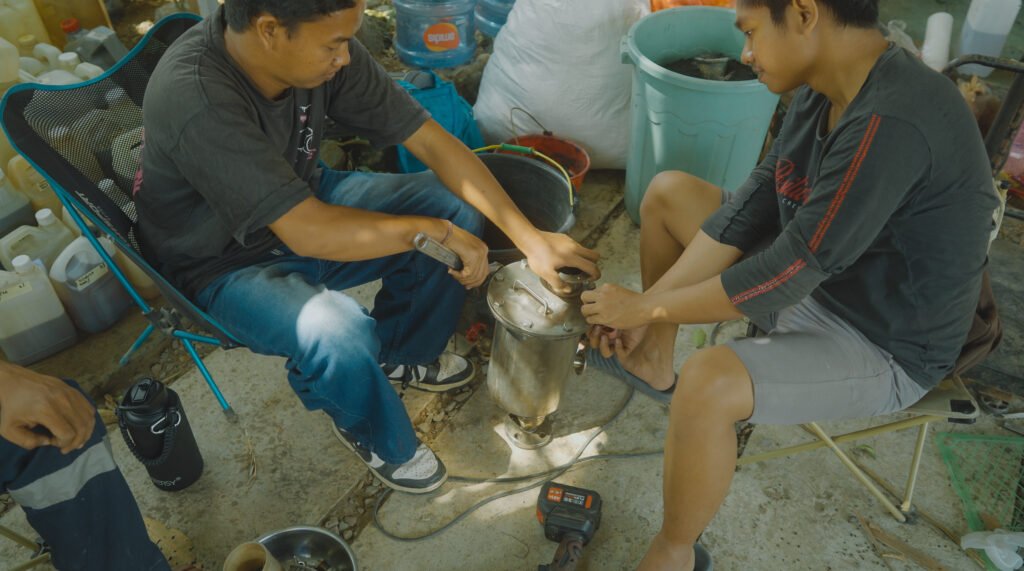
The heart of day one happened during the hands-on session with the pyrolysis machine. Staff sat facing the machine’s inner workings, going through each component one at a time as its function got explained.
There’s a real gap between knowing how to operate a machine and actually understanding what happens inside it. This session pushed Cepaka Learning Center staff toward the deeper end, letting them see the reactor’s interior, the valves, and the pipe connections they’d likely only known from the outside until now.
The Get Plastic team guided the process patiently, letting staff hold the tools themselves, tighten bolts, and feel firsthand how each part connects to the next. Learning this way tends to stick far better than watching a demonstration from a distance.
Why This Level of Technical Understanding Matters
Operating a pyrolysis machine isn’t just about pressing a button and waiting for results. When something small goes wrong on site, staff who understand the machine’s internal structure can diagnose the issue far faster than waiting for an outside technician to show up.
For a facility like Cepaka Learning Center, built as part of the community empowerment work in Cepaka Village, that kind of technical independence carries real weight. The less daily operations depend on outside help, the smoother the waste processing work runs.
Hands-On Practice in Sorting Plastic Waste
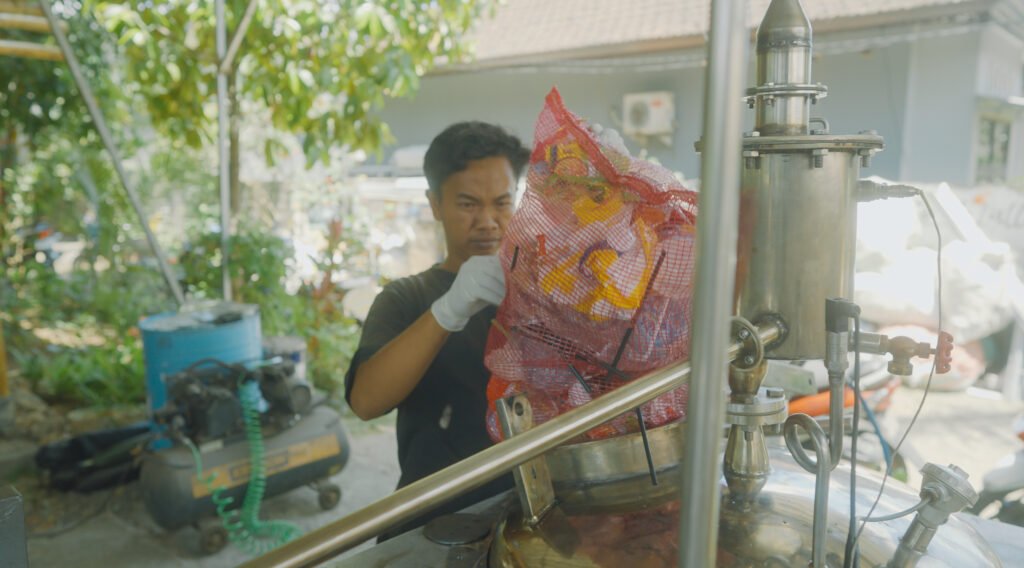
Beyond the machine, day one also covered hands-on practice sorting plastic waste. The documentation shows staff gathering plastic into red mesh sacks, separating material by type before it moves into further processing.
The task looks simple, but it demands real precision. A small sorting mistake can affect the quality of the fuel produced down the line. That’s exactly why direct practice like this carries value: it shows the sorting standard actually applied on the ground, not just a rule written on paper.
Read also: COCO Social Fund Visit to Get Plastic: Learning Together
Looking at how day one unfolded, a clear pattern emerges: a light discussion to open, then straight into hands-on fieldwork. Not hours of lecture that leave people drifting off, but a mix of casual conversation and real work.
This approach has a name in technical training circles: learning by doing. For work that demands hand skills, like operating a pyrolysis machine, this method beats lecture-based training by a wide margin. Staff didn’t just listen. They felt the texture of the work itself.
The Long-Term Payoff for Cepaka Learning Center
Day one of this visit might look like a routine technical activity on the surface, but its impact can stretch far beyond that single day. Every staff member who leaves with a better grasp of the machine and proper sorting technique carries that knowledge back to Cepaka Village, then passes it along to coworkers who weren’t part of the trip.
That ripple effect is exactly where the strength of programs run by a social foundation in Bali like COCO Social Fund shows up. Investing in one or two people can end up benefiting an entire team, and by extension, the long-term future of plastic waste processing at Cepaka Learning Center.
For any company or partner weighing a CSR program in Bali, a visit like this shows support doesn’t always need to come as a large grant. Sometimes it’s as simple as helping field staff learn directly from people who already know the craft, a small investment with returns that show up for years.
Closing Thoughts: A Foundation Built From Day One
Day one of the visit to Get Plastic closed the opening chapter of a longer learning process. From the relaxed discussion under the tent to hands actually touching machine parts and sacks of sorted plastic, everything fed into strengthening Cepaka Learning Center’s technical capacity.
This journey doesn’t end with a single day. But the groundwork laid that day, deeper technical understanding, better sorting habits, and an appetite for learning straight from the field, will carry weight into the visits still to come, and into how pyrolysis runs at Cepaka Learning Center going forward.