Not every step forward comes from discovering something brand new. Sometimes it comes from sitting down, admitting there’s room to improve, and learning from people who’ve already stumbled through the same path. That’s essentially what happened when a team from COCO Social Fund, joined by staff from Cepaka Learning Center, made a visit to Get Plastic, the Bali-based foundation that has spent years developing pyrolysis technology to turn plastic waste into fuel.
This wasn’t a formal study tour that ends with a group photo. There was a concrete agenda behind it: a briefing on Get Plastic’s upcoming pyrolysis machine upgrade, hands-on learning about proper machine operation, and an honest evaluation of the waste sorting practices already running at Cepaka Learning Center.
Why Get Plastic as the Destination?
Talk about plastic pyrolysis in Indonesia long enough, and the name Get Plastic comes up. The foundation has been active since 2016, with pyrolysis machine research stretching back even earlier, to around 2014. By now they’ve developed more than a dozen different machine designs, each refined from the one before.
What sets Get Plastic apart from a typical equipment maker is its approach. They don’t just sell a machine and walk away. Communities using their technology get ongoing support, starting with an assessment of available waste volume, all the way through to making sure the facility runs at its best. That approach fits neatly with what Cepaka Learning Center needs, since its pyrolysis operation is part of a broader COCO Social Fund environmental program, not a standalone piece of equipment.
Read also: BRIN Visit Cepaka Learning Center: Research Meets Field
Briefing on the Pyrolysis Machine Upgrade
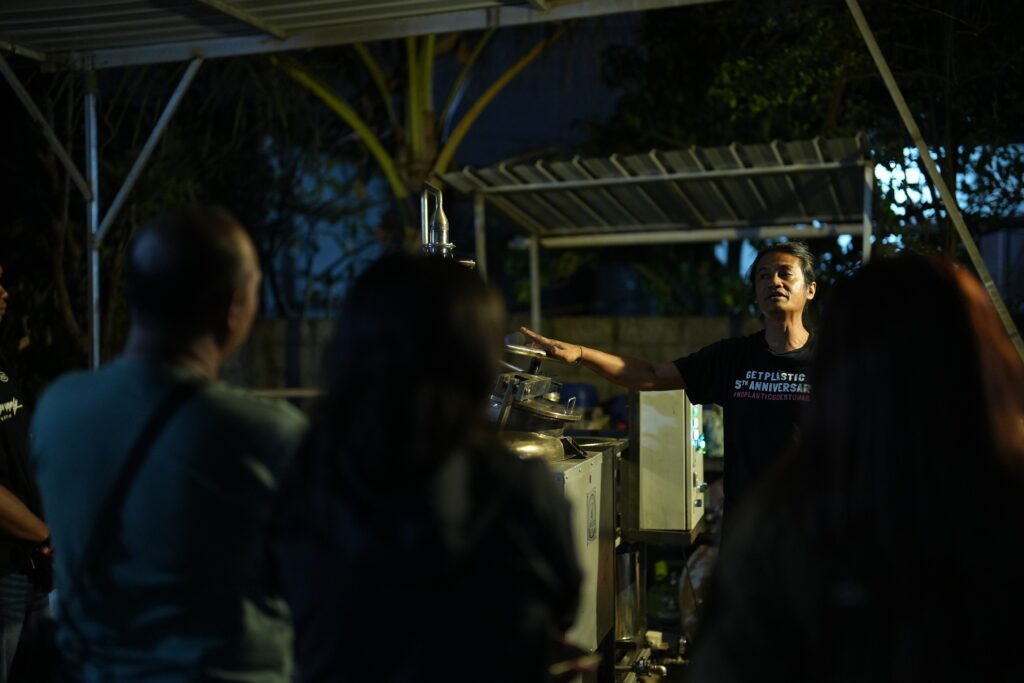
The core of the visit centered on a briefing about Get Plastic’s planned pyrolysis machine upgrade. Like any piece of equipment, pyrolysis technology keeps evolving. Newer machine generations typically bring improvements to fuel efficiency, operational safety, and day-to-day maintenance.
The COCO Social Fund team and Cepaka Learning Center staff came to understand exactly what changes were coming to their machine. An upgrade isn’t just about swapping out parts. It usually brings adjustments to working procedures too, from how the machine gets started, to the sequence of the process, to safety standards that may shift from the previous version.
Sitting down with a team that has tested more than a dozen machine designs over the years hits differently than reading a manual or watching a tutorial video. Some questions only get answered through hands-on experience. What kind of breakdown shows up most often, for instance, or which operating mistakes tend to leave the fuel output falling short.
Sessions like this open the door to a two-way conversation too. Cepaka Learning Center staff could raise the specific issues they’ve run into on the ground, while the Get Plastic team offered solutions drawn from working with dozens of other locations across Indonesia.
One topic that got real attention was waste sorting before it enters the pyrolysis process. It’s easy to treat sorting as an afterthought, but it actually determines the quality of the final output.
Plastic processed through pyrolysis ideally needs to be dry and properly separated. The wrong mix of materials, or plastic that’s still wet or dirty, can hurt both machine efficiency and fuel quality. A small mistake at the sorting stage can carry a big cost by the end. It’s a basic principle that applies to just about any raw material process, not only pyrolysis.
Through this visit, Cepaka Learning Center staff picked up more detailed guidance on which types of plastic work best, how to separate out residue that can’t be processed, and how to store plastic properly while it waits to go into the machine.
An Honest Look at Current Practices
Just as important as the technical side was the evaluation. Not the kind meant to place blame, but more of a shared reflection: what’s working well at Cepaka Learning Center, and what could still use improvement.
That kind of honesty takes some openness. It’s never easy to admit a process isn’t running at its best, especially in front of an outside party. But that’s precisely where this visit earns its value. Rather than sticking with old habits without knowing a better way exists, it makes more sense to learn directly from people who’ve already tested different approaches.
The results of this evaluation will likely shape adjustments to Cepaka Learning Center’s standard procedures going forward, from the sorting workflow, to machine maintenance schedules, to more realistic and measurable fuel output targets.
Beyond the technical details, one thing about this visit stands out on its own. Two foundations both working on plastic waste chose to share knowledge rather than operate in isolation.
That choice shows how a social foundation in Bali can strengthen another rather than compete for attention. Get Plastic brings deeper hours logged on pyrolysis technology, while COCO Social Fund brings experience managing community and social programs in Cepaka Village. Combined, the two are likely to produce something more refined than either could reach alone.
This kind of collaboration also matters for any company or partner considering a CSR program in Bali. Support doesn’t always need to come as a large one-time grant. Sometimes it looks like facilitating exactly this kind of knowledge exchange, the type of contribution that often carries a longer shelf life.
Closing Thoughts: A Small Investment With a Long Reach
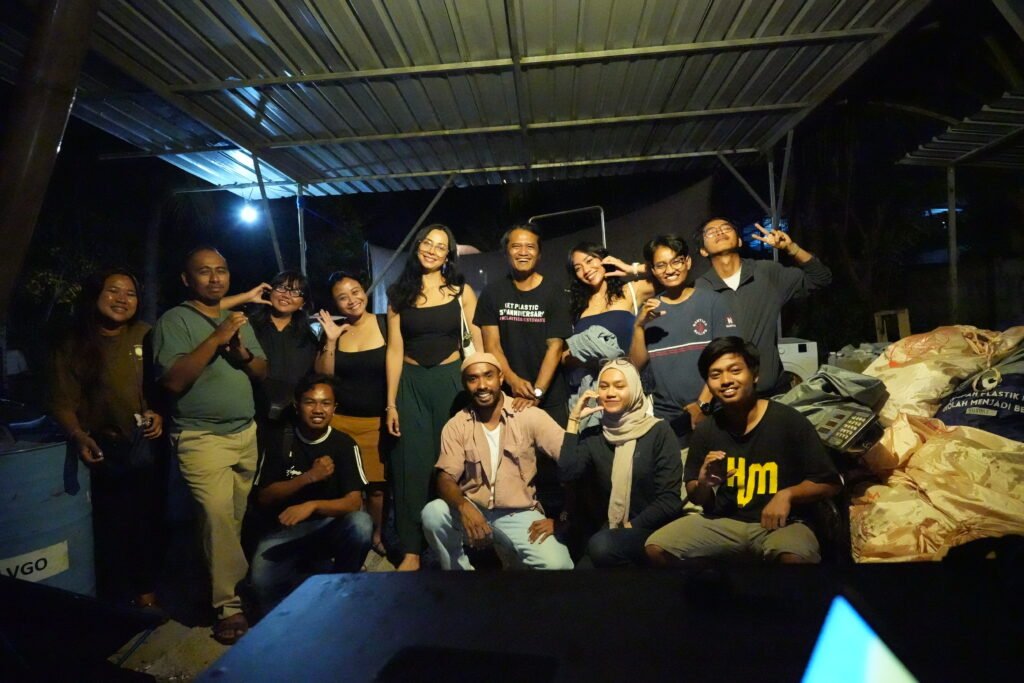
The COCO Social Fund visit to Get Plastic probably won’t make headlines the way a beach cleanup or a giant flag unfurling does. But it’s exactly this kind of quiet moment where the long-term foundation of an environmental program usually gets built.
A better machine upgrade, tighter waste sorting, and an honest look at old practices all point toward one simple outcome: better pyrolysis results at Cepaka Learning Center, and a stronger commitment to keep improving rather than settling for what already seems “good enough.”