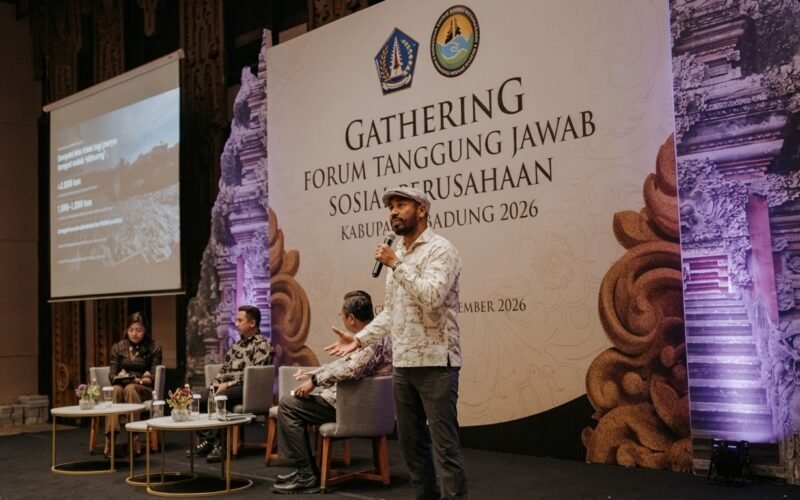
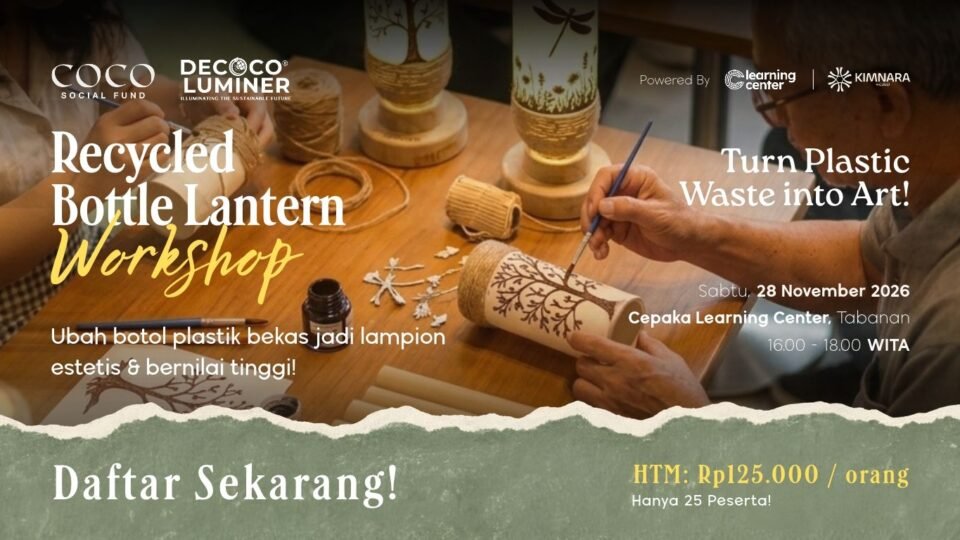
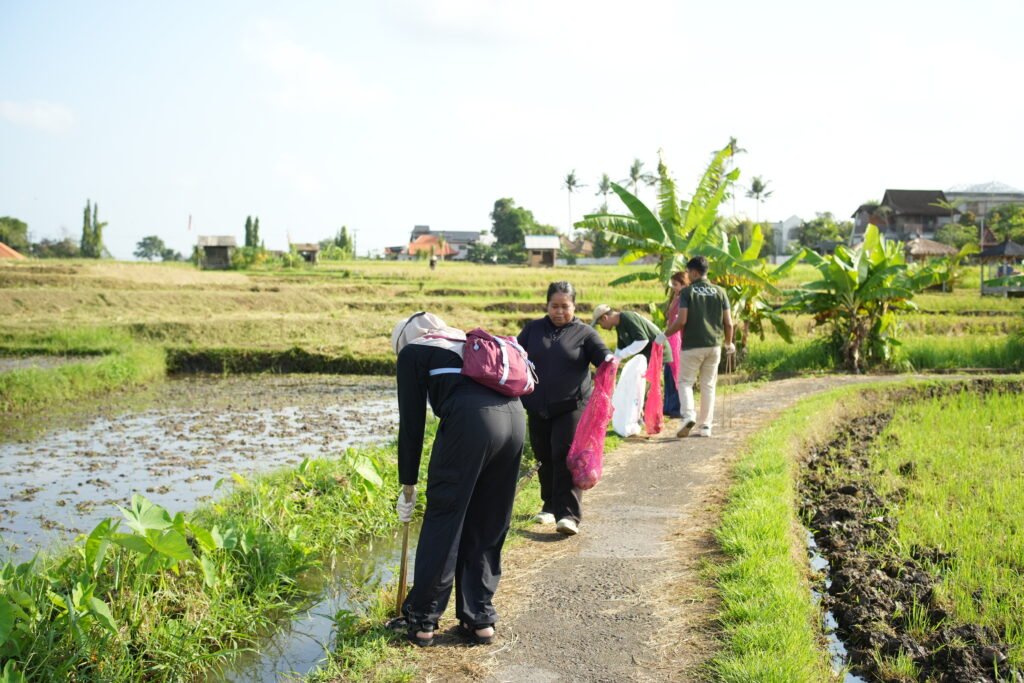
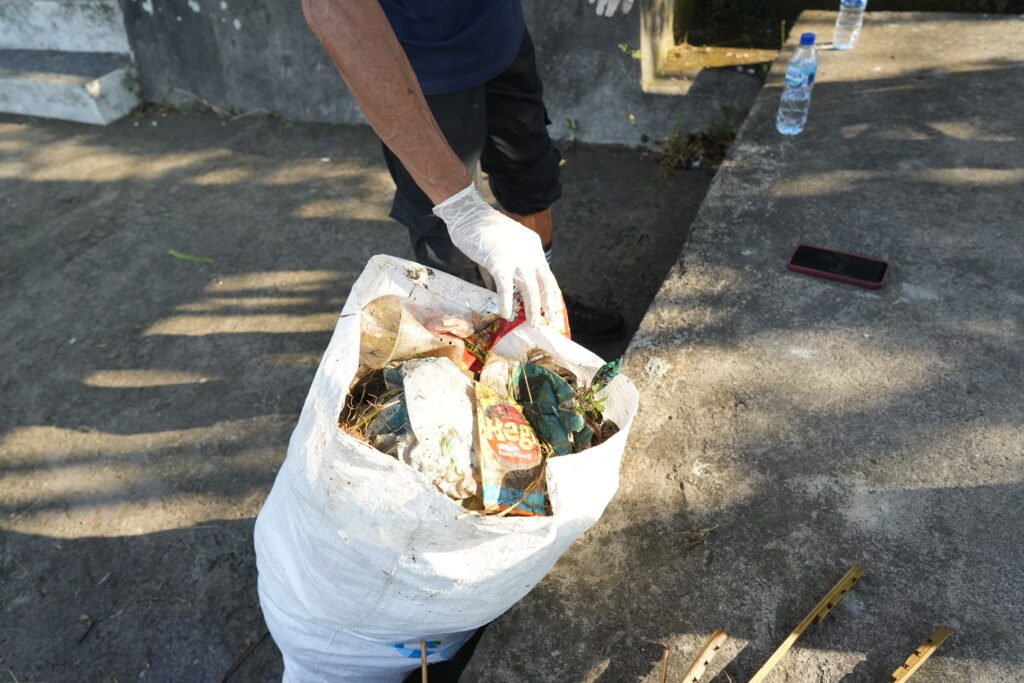
On a Sunday morning in Cepaka Village, around 20 volunteers set off along the village jogging track, picking up trash as they went. They had joined Walk Your Trash, a healthy walk and subak clean-up organized by COCO Social Fund with Bali Lebih Bersih by Ocean Hero. The goal was simple: get moving, enjoy a fresh morning in the countryside, and leave the village cleaner than they found it.
Walk Your Trash: A Healthy Walk Along the Subak
Cepaka Village’s jogging track winds through the subak, Bali’s traditional rice field irrigation system. Along the way, volunteers picked up litter from the rice fields, footpaths, and irrigation channels.
Bali Lebih Bersih is an environmental campaign started by OceanHero, and it has already run several clean-ups across Bali, including in subak areas. This time, it was Cepaka’s subak they walked together with the CSF team.
Why Trash in the Subak Is a Problem
Trash left in the subak has three direct effects:
- Blocked water flow. Farmers depend on a steady flow of water to irrigate their fields.
- Polluted soil. Plastic left in the fields contaminates the farmland.
- Waste carried downstream. Over time, trash from irrigation channels washes into rivers and then the ocean.
The Subak as World Cultural Heritage
UNESCO recognized the subak as a World Cultural Heritage site in 2012, as an expression of the Tri Hita Karana philosophy: harmony between people, nature, and the divine. The same philosophy guides COCO Social Fund’s work. By cleaning the subak channels, volunteers helped care for rice fields that are part of Balinese cultural preservation.
COCO Social Fund’s official website tells how the foundation began with Cepaka’s irrigation channels, where piled-up trash caused flooding every rainy season. Data on CSF’s website at the time of writing also lists the Irrigation Channel Restoration (Subak) program as the largest source of waste across all of CSF’s clean-up activities, at 3,900 kilograms or around 69 percent of the total collected.
Read also: Little Farmers COCO Social Fund: Cepaka Children Walk the Rice Fields Around Kimnara Space
After the Clean-Up: Sunday Well Spent at Cepaka Learning Center
With the trash collected, volunteers headed to Cepaka Learning Center for Sunday Well Spent, a relaxed session to rest, refresh, and get to know fellow volunteers. The program then continued with a pyrolysis tour and an introduction to the circular economy system being developed in Cepaka Village.
Volunteers learned how the village manages organic and inorganic waste. For plastic, the Cepaka Village BUMDes (village-owned enterprise) divides it into seven categories: HDPE, LDPE, PS, PP, PET, PVC, and Other.
Clean, dry plastic is heated in a reactor with little or no oxygen. The vapor is then cooled until it becomes liquid fuel, with black carbon residue left over.
The last part of the tour explained how recovered resources go back to meeting village needs, such as fuel for waste-collection trucks and agricultural tractors. The carbon residue is turned into resin crafts in the Waste to Worth workshop.
Value for Partners and the Community
Walk Your Trash combines exercise, a clean-up, and education in a single morning. The format is easy to join and suits the Bali environmental and cultural community looking to act together.
For companies weighing a CSR program in Bali, it can work as an employee volunteering option with results you can see right away. The Cepaka Learning Center tour adds an educational tourism element, a pattern other social foundations in Bali could also borrow.
Closing Thoughts: From Irrigation Channel to Pyrolysis Machine
In one morning, around 20 Walk Your Trash volunteers picked up trash from the Cepaka subak, then saw for themselves where some of that plastic goes next.
If you walk or cycle around rice fields, carry a small bag for your own trash. That small habit helps keep trash out of irrigation channels. For the next edition, follow the official channels of COCO Social Fund and Bali Lebih Bersih.