Used bottle caps are usually seen as tiny bits of trash with no value. They’re small, easy to lose, and rarely thought about once the bottle is empty. Through the Re-Cap Workshop, COCO Social Fund teamed up with Kompas.com to invite the public to see those caps differently, then turn them into keychains.
Re-Cap Workshop: From Small Trash to Creative Work
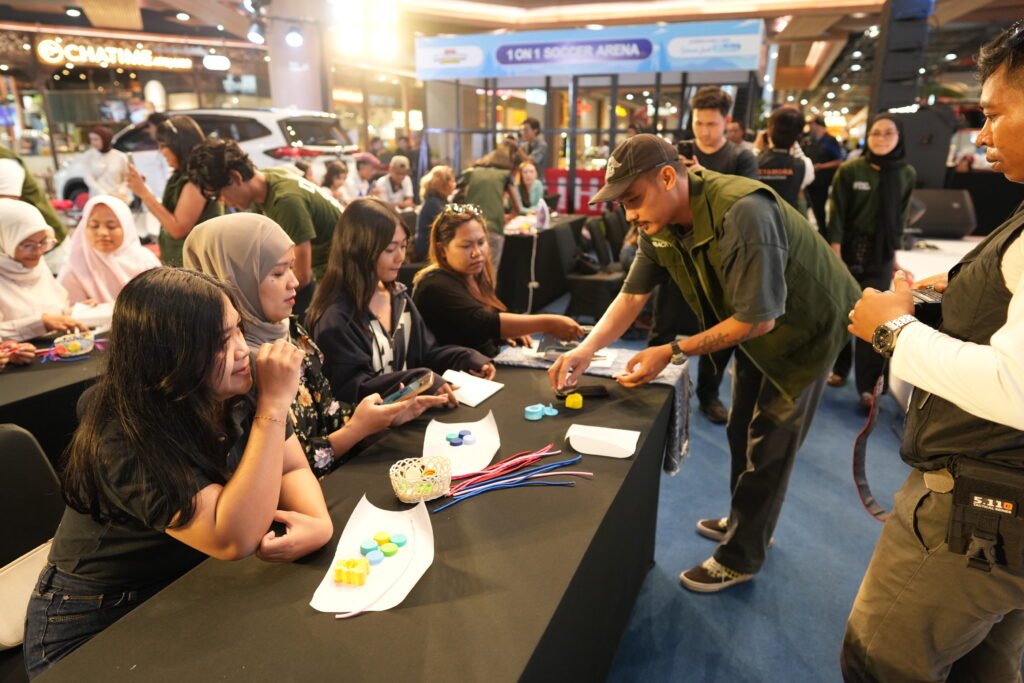
In this workshop, participants saw firsthand how bottle caps no longer in use can be put back to work. They didn’t stop at collecting and sorting. The material was turned into something with a function and practical value.
Participants picked out bottle caps, prepared their materials, cut or processed the material, then assembled it into keychains. With a little creativity, the results came out in a variety of shapes and looks.
One lesson came out of it: processing waste doesn’t always require big technology. Simple creativity can also extend a material’s useful life.
Different Plastics, Different Paths
Not all plastic waste is processed the same way. At Cepaka Learning Center, certain plastics go through pyrolysis to produce fuel. Bottle caps, as in this workshop, can be reused through a creative approach. Both show that each material has its own character and processing potential.
So get to know the type of waste first, before deciding how best to use it. Bottle caps are generally made of PP (code 5) or HDPE (code 2), unlike the body of a drinks bottle, which is usually PET (code 1). In Cepaka, plastic is sorted into seven categories, and PET and PVC are screened out of the pyrolysis machine. In the data shown on CSF’s website at the time of writing, LDPE dominated sorted plastic at 85.6 percent, while PP made up just 2.9 percent and HDPE 0.8 percent.
The Circular Economy Starts Simple
Through the Re-Cap Workshop, COCO Social Fund and Kompas.com aim to show that the circular economy can start with the objects around us. With the right sorting and processing, used material still has a chance to be used again. This time, the bottle caps we usually overlook became the main material for a piece of work.
Value for Partners and the Community
A foundation teaming up with a media outlet like Kompas.com carries the message of waste management to a wider readership. The format is also easy to copy, since the materials are easy to find.
Other social foundations in Bali can use it as an educational activity. Companies weighing a CSR program in Bali can use the workshop format to involve employees or customers directly. The Bali environmental and cultural community gains a shared space to learn about waste that’s close to everyday life.
Closing Thoughts: One Bottle Cap, Many Possibilities
A single bottle cap looks small. From something that small, the Re-Cap Workshop shows many ways to reduce waste and extend a material’s value, from processing technology, to reuse, to creativity that produces new products.
If you’d like to start at home, collect bottle caps separately from the bottles. If you try making crafts with children, choose methods that don’t involve heating plastic, such as drilling a hole in the cap and then decorating and assembling it, since heated plastic can give off fumes.