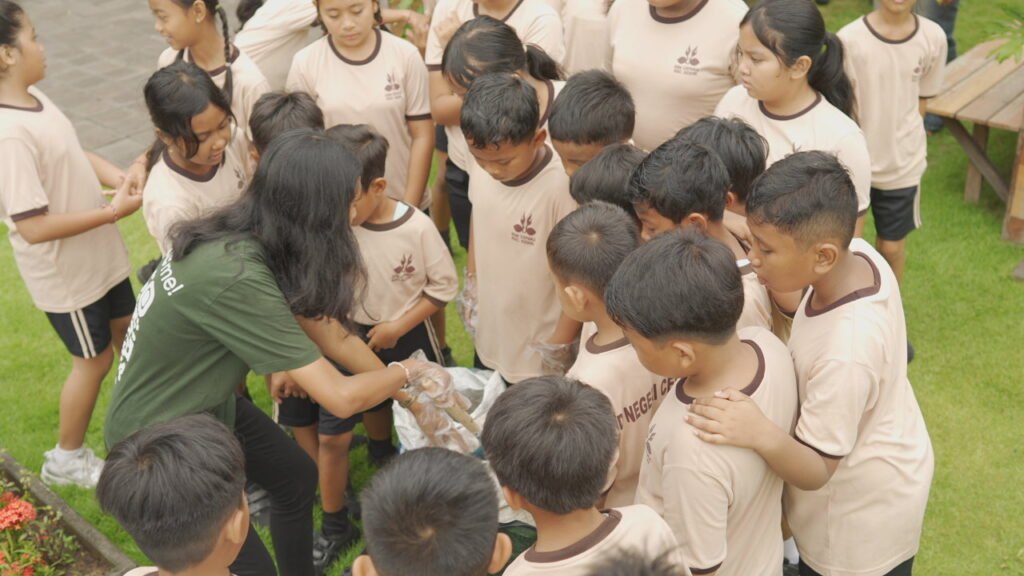
Banana peels, vegetable scraps, and dry leaves usually end up in the trash. At the Petani Cilik (Little Farmers) session on Saturday, November 21, 2026, they became lesson material instead. Elementary school children from Cepaka Village learned to make growing media from organic waste: turning kitchen scraps and leaves into compost, then mixing it with soil to fill polybags.
Little Farmers So Far
COCO Social Fund’s Petani Cilik program runs in stages. The first session on October 17 took children through the rice fields around Kimnara Space to hear how rice is planted. On October 24, they started planting tomatoes, eggplant, and chili in polybags.
The November 21 session moved on to the next question: plants in polybags need fertile soil, and that fertility can come from kitchen scraps. The group was mixed. Some had joined earlier sessions, and some were new.
Step One: Getting to Know Compost From Kitchen Scraps and Leaves
Compost is organic waste that has broken down into a soil-like material. Ingredients can include vegetable scraps, fruit peels, coffee grounds, and dry leaves.
In general, good compost combines two kinds of material. Wet “green” material, like vegetable scraps and fruit peels, brings nitrogen. Dry “brown” material, like leaves and small twigs, brings carbon. Both are chopped, mixed, kept moist, and turned now and then to let air in. Over a few weeks, microorganisms break the mix down into compost.
Not every kitchen scrap belongs in the pile. Meat, bones, and oily food are best left out, since they can smell and attract animals.
Step Two: Mixing Compost Into Polybag Soil
Mature compost is mixed with soil, then packed into polybags. The mix makes the soil looser, helps it hold water, and adds nutrients for the plants.
Mature compost is easy to recognize: it’s dark, crumbly, and smells like earth, not like trash.
A Step Toward Organic Results
During the planting session, COCO Social Fund noted that the crops planted aren’t automatically organic. The choice of fertilizer and how soil health is maintained need attention from the start. This compost session answers part of that note, since the children learned to enrich soil with materials found right around them.
The lesson also connects to CSF’s wider work. In Cepaka Village, plastic waste is sorted and processed through pyrolysis at Cepaka Learning Center. Organic waste has its own path, and compost is one of them. This session introduced the children to that second path.
Why Learn Composting in Elementary School
Kitchen scraps show up every day in almost every home. A child used to setting aside vegetable scraps and leaves can bring that habit home and get their parents involved.
Compost also teaches patience, a lesson that first came up in the planting session. What gets mixed today is only ready to use a few weeks later.
The Tri Hita Karana philosophy that guides CSF puts harmony between people and nature, or palemahan, as one of its pillars. Returning kitchen scraps to the soil is a simple way to practice it.
Value for Partners and the Community
The materials for this session are simple: kitchen scraps, leaves, soil, and polybags. The format is easy for schools or other communities to copy as an educational activity for children in Bali. Companies weighing a CSR program in Bali could support similar programs, for example by providing chopping tools, compost bins, or seedlings for the next session.
Closing Thoughts: From Trash Bin to Polybag
The session on growing media from organic waste gave the Little Farmers one more skill: preparing their own soil for the tomatoes, eggplant, and chili they had already planted.
To try it at home, start with one lidded container for vegetable scraps and fruit peels. Add dry leaves each time you put in wet scraps, stir once a week, and keep it moist. Within a few weeks, the mix can become compost for pots or polybags at home.