If every vegetable we eat has to be bought, it’s easy to forget that we can start growing our own. That’s the message behind the Little Farmers planting in polybags session on October 24, 2026. A week after the first session introduced how rice is planted, children began practicing with tomatoes, eggplant, and chili. The goal doesn’t stop at getting plants to grow, but also introducing farming methods that lead toward organic results.
From Rice Field to Polybag: The Second Little Farmers Session
On COCO Social Fund’s official website, Petani Cilik (Little Farmers) is described as hands-on agricultural education where children reconnect with the land and learn to farm sustainably. The first session was a presentation about rice. In the second, the explanation stayed, but it was followed by planting practice.
Learning How Plants Live, Then Become Food
The basics are simple: plants live on sunlight, water, air, and nutrients from the soil. Roots absorb water and nutrients, while leaves use sunlight to make food for the plant itself through photosynthesis. That process is where the parts we eat come from: fruit like tomatoes, eggplant, and chilies, leaves, roots, or seeds. That way, the plant in the field connects to the food on the plate.
Planting in Polybags, From Growing Medium to Watering
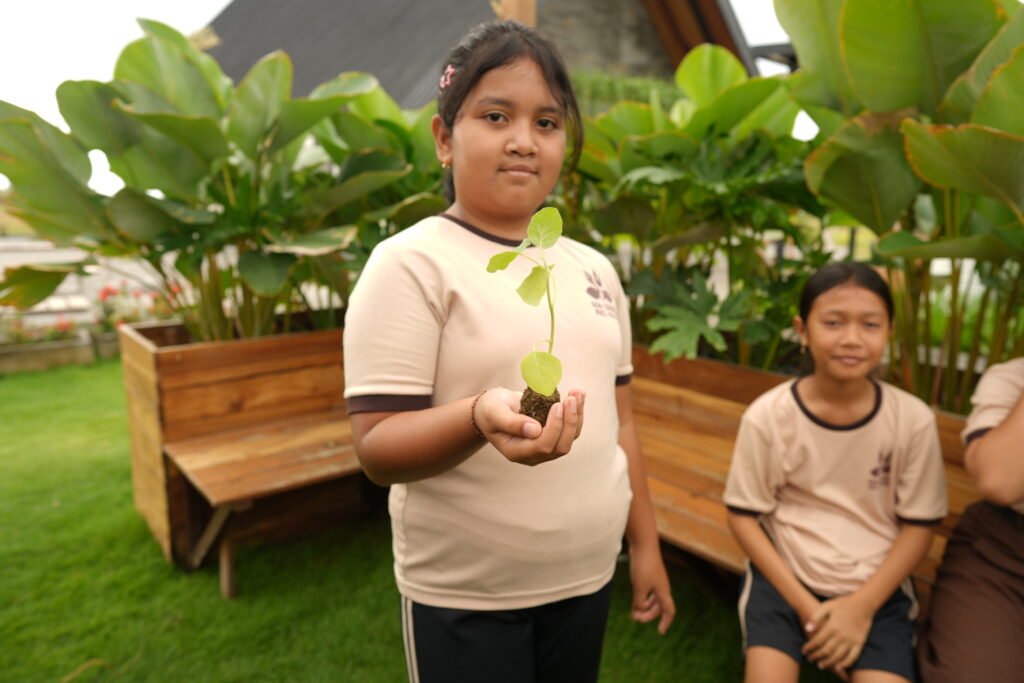
After the explanation, children were invited to plant directly in polybags. Some planted tomatoes, eggplant, and chili.
Planting looks simple: drop the seedling in, cover it with soil, then water. Behind it are a few things to understand. Children learned to prepare the growing medium, place the seedling correctly, cover its roots with soil, then make sure the plant gets enough water and care.
The three crops were chosen because they sit close to everyday life. Ingredients commonly found in the kitchen become a route to understanding where food comes from and how it’s grown. Polybags suit that purpose: the planting bag fits a small yard, a porch, or the edge of a house, its size suits a child’s hands, and it needs no large plot, so it’s easy to repeat at home.
Read also: Little Farmers COCO Social Fund: Cepaka Children Walk the Rice Fields Around Kimnara Space
Caring for Plants Takes Patience
Plants don’t bear fruit in a day. All three pass through seedling, leaves, and flowers before reaching fruit, a run that takes weeks, and every stage needs attention. Through this practice, children learn that farming demands patience.
Toward Organic Results, With One Note
How do you grow organic crops? The first step is understanding what’s used for planting and how the plants are cared for. The choice of fertilizer, pest control, and ways to keep the soil healthy all need attention from the start. That’s why planting all three gives children a chance to start getting to know more environmentally friendly farming practice.
The note: the crops planted aren’t automatically organic yet. They need suitable, consistent care until the plants grow and bear fruit.
The Aim: A Reference Point and a Next Generation of Farmers
The second session continues the aim CSF has given for the program: creating a reference point and preparing the regeneration of farmers for the future. The hope that comes with it is growing curiosity, care for the environment, and an understanding of producing food in a more sustainable way.
The Tri Hita Karana philosophy that guides CSF puts harmony between people and nature, called palemahan, as one of its pillars. Planting is one of the most direct ways to practice it. Introducing it to children through soil and plants can help preserve Balinese culture.
Value for Partners and the Community
Petani Cilik is small in scale and simple in materials: soil, polybags, and seedlings. That makes the format easy to copy. For other social foundations in Bali, the program offers an example of educational activities for children in Bali that need no building. For any company weighing a CSR program in Bali, children’s farming education is support whose results can be seen growing from week to week.
Closing Thoughts: Plant Today, Harvest Later
Planting today won’t produce tomatoes, eggplant, or chilies ready to pick tomorrow. A long process is still ahead. That’s where the learning sits: children come to know that food takes time, care, and responsibility. From the few seedlings planted today, a new habit can grow of staying closer to nature and caring more about the food we eat every day.
If you’d like to try this at home, prepare a polybag with holes in the bottom, fill it with a mix of soil and compost, and set it where it gets direct sun for a few hours a day. Water regularly without letting the soil get soggy. Invite your child to pick the plant and note its progress every week.