

There’s a unique kind of energy that only happens when you mix curious kids with a hands-on mission to save the planet. Recently, the air at SD Negeri Cepaka in Tabanan, Bali, was buzzing with exactly that.
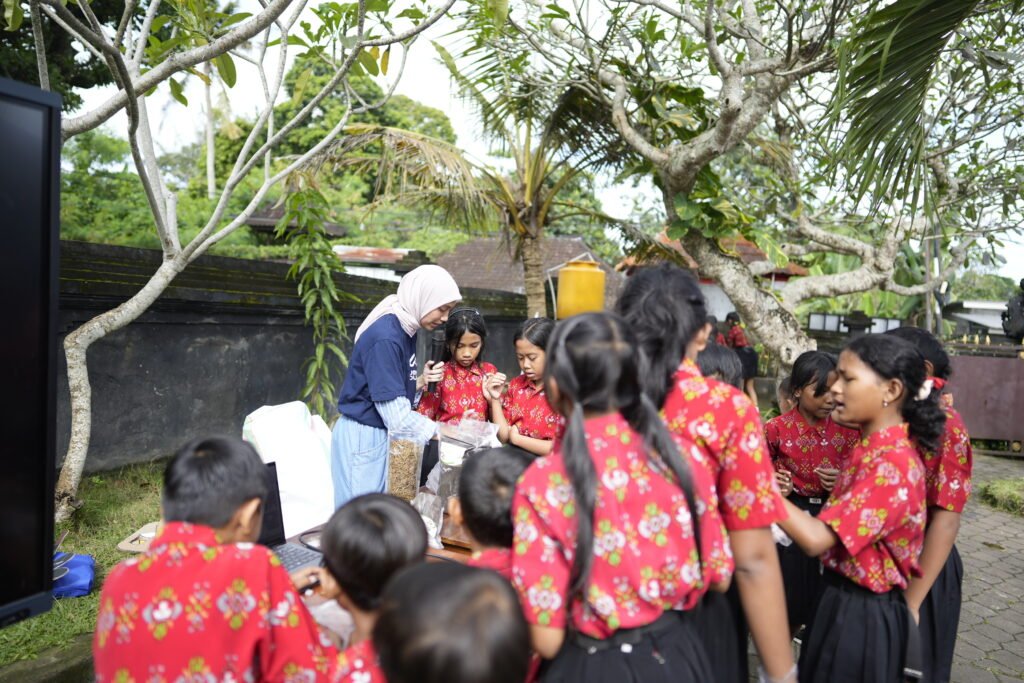
In a vibrant collaboration with Umah Pupa, we hosted an interactive workshop that went far beyond the chalkboard. We weren’t just talking about sustainability; we were getting our hands dirty—literally. The goal? To master organic waste management through the fascinating world of maggot farming.
A Three-Step Journey into the Circular Economy
To keep things engaging, we turned the school grounds into a “Learning Circuit” with three distinct stations. Here’s how the students transformed from pupils to eco-warriors:
Station 1: The Art of the Sort
The journey began with the basics: Waste Sorting. Before you can find a solution, you have to understand the problem. The students learned to distinguish between types of waste, realizing that “trash” is only trash if we don’t know how to categorize it. Sorting is the first step toward a zero-waste lifestyle.
Station 2: The Feast (Chopping & Feeding)
This was where the action happened! The kids saw firsthand how leftovers aren’t just “scraps”—they are fuel. They helped chop organic waste and fed it to the maggots. It was a live demonstration of nature’s most efficient recycling system: seeing food waste disappear and be repurposed by these tiny “waste-munching” heroes.
Station 3: The Harvest (Bio-Fertilizer & Protein)
At the final stop, the students discovered the “gold” at the end of the rainbow. They learned how harvested maggots serve as a high-quality alternative protein source and how their residue (frass) becomes a potent organic fertilizer. It was a full-circle lesson in how nothing in nature is ever wasted.
Courage Over “Cooties”
The most beautiful part of the day wasn’t the technical process, it was the kids themselves. While many adults might shy away from a pile of maggots, these students met them with pure curiosity.
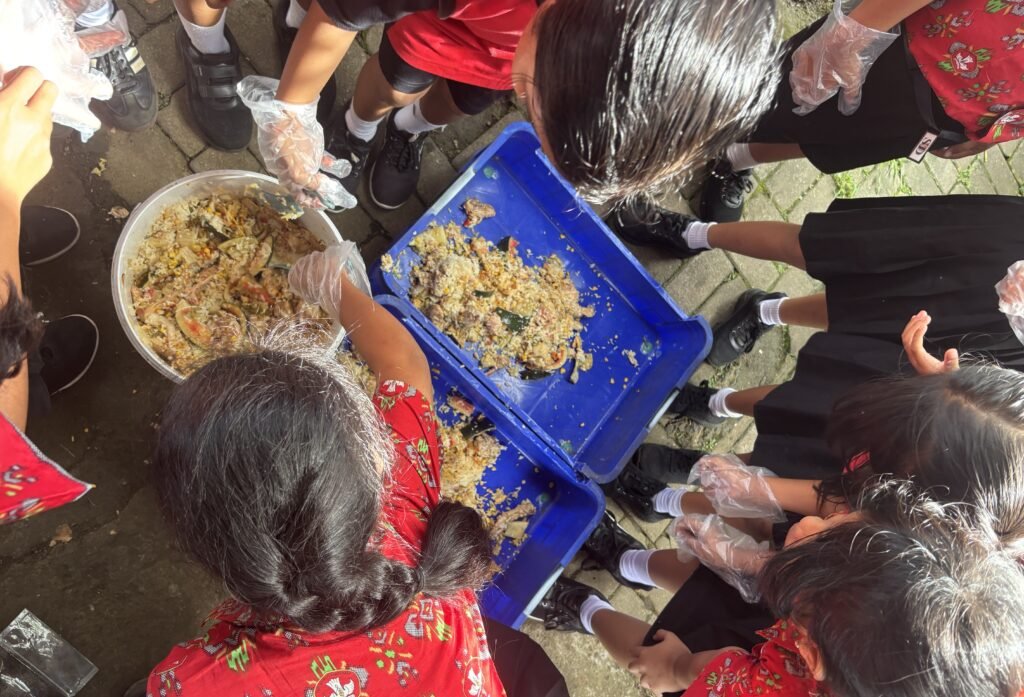
Watching their initial “eww” faces turn into looks of fascination and seeing them bravely handle the maggots was a reminder that fear is learned, but curiosity is natural. Their willingness to try new things is exactly what our planet needs.
Why Early Education Matters
Environmental education shouldn’t be a dry subject in a textbook. It needs to be fun, applicable, and relevant to everyday life. By starting early, we aren’t just teaching a skill; we are nurturing a mindset.
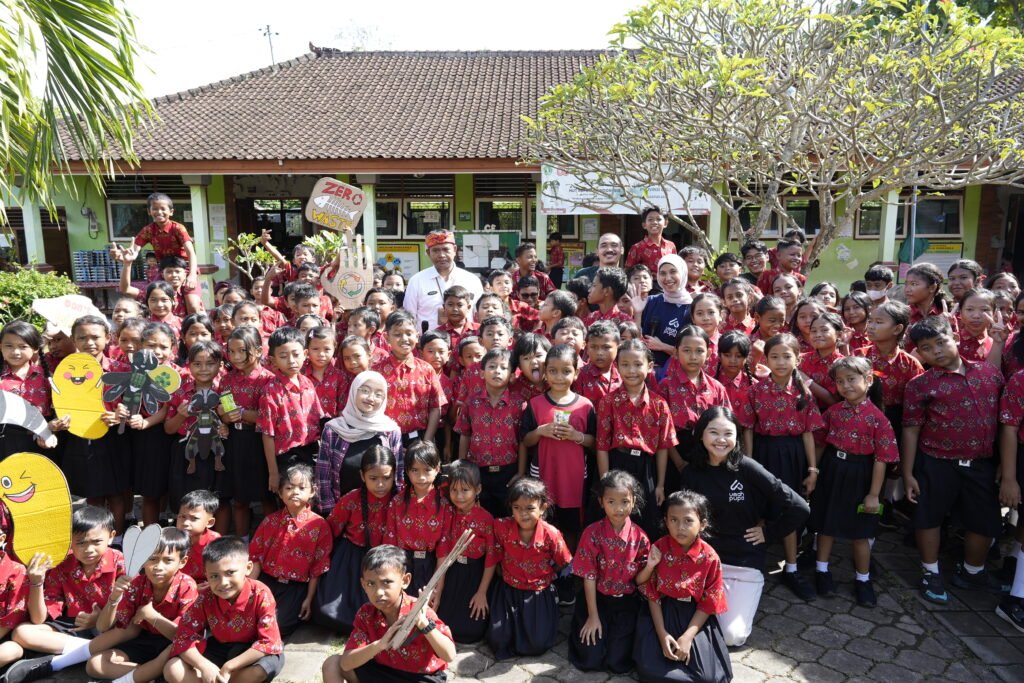
A massive thank you to SD Negeri Cepaka and Umah Pupa for this incredible collaboration. If today’s energy was any indication, these small steps will soon become the big, sustainable habits of the future. 🌏