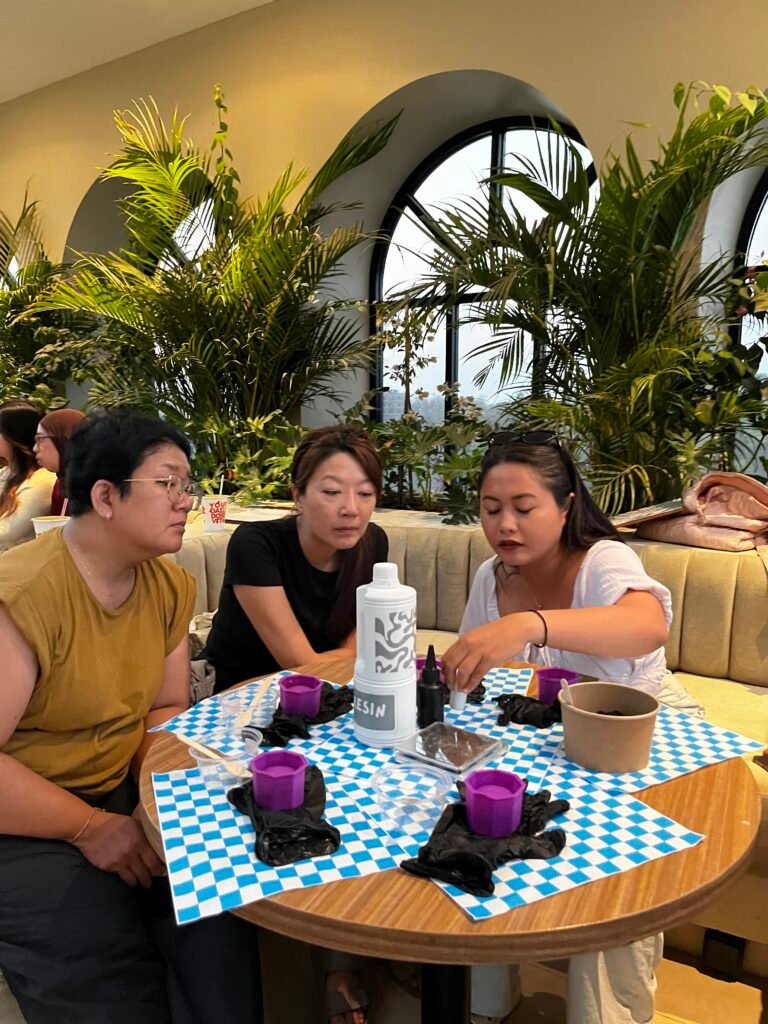
On Saturday, October 10, 2026, 17 people sat around tables in a room with a curved ceiling, arched windows, and rows of tropical plants at Coco Lifestyle Resort. All of them were first-time participants. This was the Waste to Worth second edition, a workshop run with COCO Social Fund and Get Plastic that turns pyrolysis carbon residue into resin flower pots.
Waste to Worth Second Edition: Same Format, New People
The program followed the first edition: workshop, games, then a presentation about COCO Social Fund. What changed was the crowd.
With participants who had never heard of pyrolysis, the explanation is best started from the basics, since terms like carbon residue may still sound abstract. Pyrolysis heats dry plastic without burning it, through dry distillation, and the output is liquid fuel, gas, and black carbon residue. That residue is the raw material for the pots made in this workshop.
The Display Table: An Introduction for Newcomers
Photos from the day show a display table of sample products made from black carbon, including a block labeled paving block and several other black items. Another photo shows three small blue-capped bottles holding liquid in different colors, apparently samples of processed output.
With those items on the table, the technical terms have a form people can look at.
Read also: Waste to Worth at Coco Lifestyle Resort: Craft in Stillness
From Carbon to Flower Pot
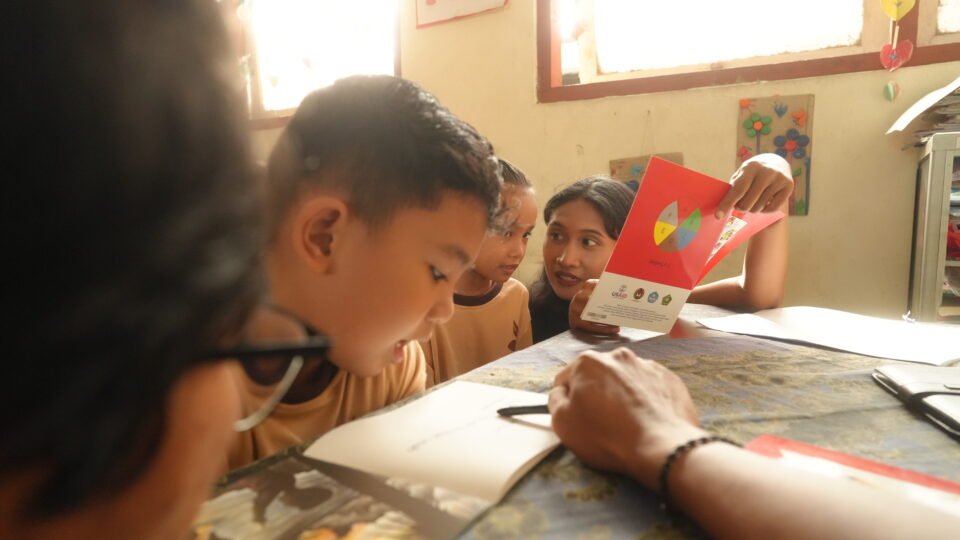
At the workshop tables, participants sat in small groups. The workshop makes pots from resin combined with pyrolysis carbon residue, a material previously treated as extra waste at the tail end of processing. On one table sits a white pot with a swirling gray-black pattern, apparently an example of the finished piece.
COCO Social Fund has already pointed in this direction. In the Digital Circular Journey, the foundation shared a plan to turn black carbon into creative economy products like souvenirs and coffee coasters.
After the Workshop: Games and the Presentation
After the workshop, the program moved into games, then closed with a presentation about COCO Social Fund. In one video, a host stands holding a microphone near the bar area. The closing presentation introduces COCO Social Fund and its programs.
New participants mean more people hearing the plastic waste processing story firsthand. Seventeen people is a small number, but a group that size makes it easier for each participant to join in and ask questions.
For any company weighing a CSR program in Bali, this edition shows one role to take on: provide the space and connect a new audience with the foundation’s programs. Coco Lifestyle Resort took on that role as host. For other social foundations in Bali, a craft workshop offers a friendly way to introduce a technical topic like pyrolysis to a general audience.
Closing Thoughts: Starting From 17 New Participants
The Waste to Worth second edition introduced pyrolysis and its leftover carbon to 17 people who hadn’t taken part before. From a number that small, the group of people who know the program has started to grow.
If you’d like to join the next edition, follow COCO Social Fund’s official channels. Bringing along one friend who has never heard of pyrolysis is another way to widen the reach of this story.