Date: [add filming date] · Location: Cepaka Learning Center and Kimnara Café by COCO, Cepaka Village, Tabanan
Ever thrown away a plastic bottle, a shampoo bottle, or a sachet and felt the job was done? For that trash, the journey is only beginning. That’s the question Universitas Udayana students brought to Cepaka Village. In this Udayana student coverage for the UR-GENZ program, they traced how plastic waste can end up as fuel at Cepaka Learning Center.
UR-GENZ and the “Plastic Case” Mission
UR-GENZ is a program themed “Seeing Bali From the Perspective of Young People.” The Cepaka episode belongs to its soft news segment, titled “Gentective: The Plastic Case,” with the tagline “Don’t just scroll. Investigate!”
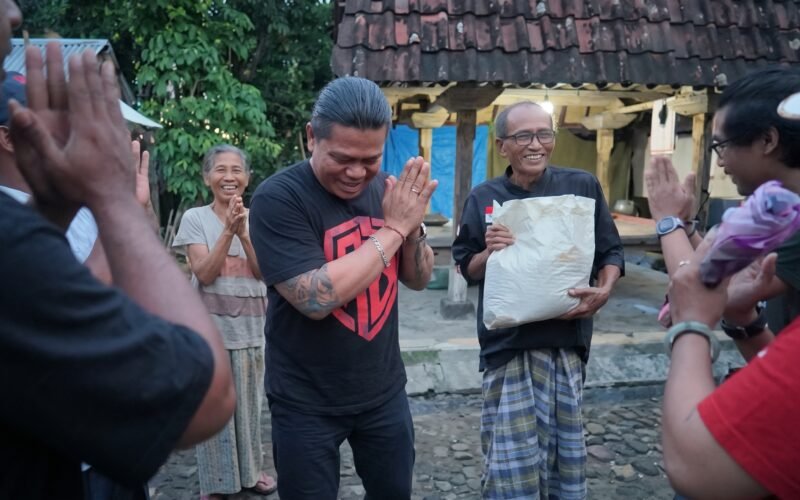
The format is walk and talk. The host chats casually with the COCO Social Fund team while walking and watching activities firsthand, from Cepaka Learning Center to Kimnara Café by COCO.
Three Pieces of Evidence: A Water Bottle, a Shampoo Bottle, and a Sachet
The host brought three everyday items: a mineral water bottle, a shampoo bottle, and a sachet. All three are plastic. The question is whether all three can be processed the same way.
In general, the answer is no.
- Mineral water bottles are usually made of PET, marked with code 1 on the bottom. This type is generally in demand for mechanical recycling, and in Cepaka, PET doesn’t go into the pyrolysis machine.
- Shampoo bottles are commonly made of HDPE, code 2. It’s a fairly rigid plastic that is also widely recycled mechanically.
- Sachets are usually multilayer packaging made from several materials at once. Those layers are hard to separate for mechanical recycling, so sachets frequently end up in landfill.
So before deciding how to process plastic, you need to know what type it is.
Why Not All Plastic Goes Into the Same Machine
Each plastic type has a different chemical makeup. In Cepaka, the BUMDes (village-owned enterprise) sorts plastic into seven categories: HDPE, LDPE, PS, PP, PET, PVC, and Other. Some types can damage the machine or produce unwanted substances when heated, so PET and PVC are screened out from the start.
Following Plastic Through Cepaka Learning Center
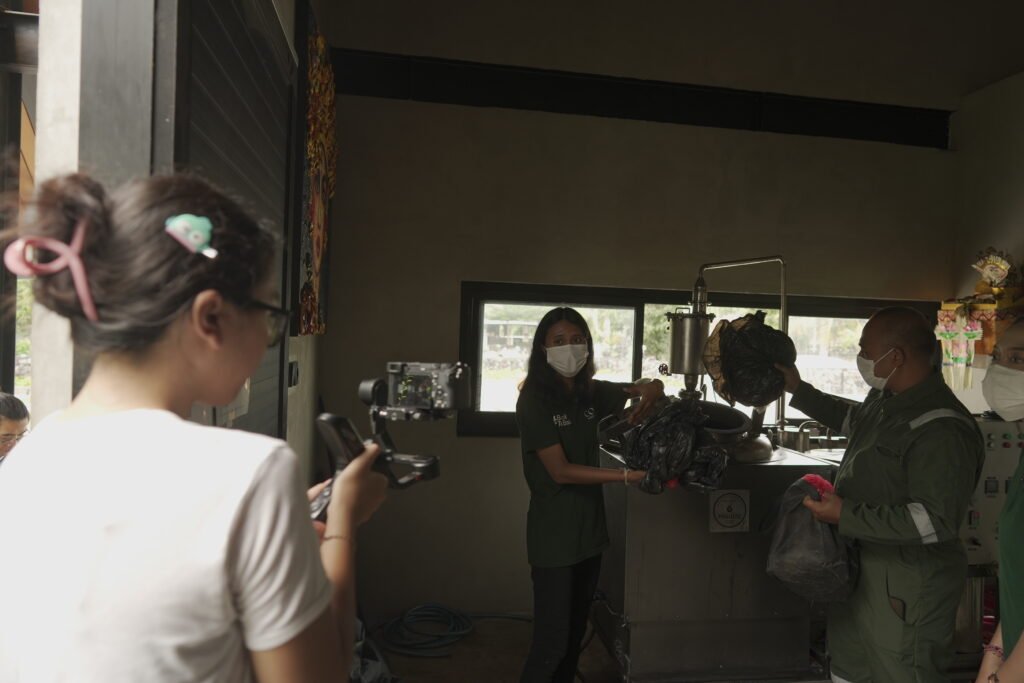
Once it was clear that each plastic has its own path, the crew followed the journey of plastic that is accepted for processing. The path runs in several stages.
Stage 1: Sorting
Plastic is sorted according to the criteria for entering pyrolysis. Sorting decides whether a piece of waste goes on to the machine or needs another route.
Stage 2: Preparation
Plastic entering the machine needs to be clean and dry. Dirty or wet plastic can disrupt the process and lower the quality of the output.
Stage 3: Pyrolysis
Many people assume the plastic here is burned. Pyrolysis works differently. Plastic is heated in a reactor with little or no oxygen, so its hydrocarbon chains break down into vapor.
Stage 4: Condensation
The hydrocarbon vapor flows into a condenser. There, part of the vapor cools and turns into liquid.
Stage 5: The Final Product
The process produces three outputs: pyrolysis liquid, gas that doesn’t condense, and solid residue. In Cepaka, the liquid is separated into diesel and gasoline, then used for village needs such as waste-collection trucks and agricultural tractors. The black carbon residue becomes resin crafts through the Waste to Worth workshop.
Case Almost Solved
Of the three pieces of evidence, not all share the same processing path. Some are better suited to mechanical recycling, some have potential for pyrolysis, and some need different handling.
Value for Universities and Partners
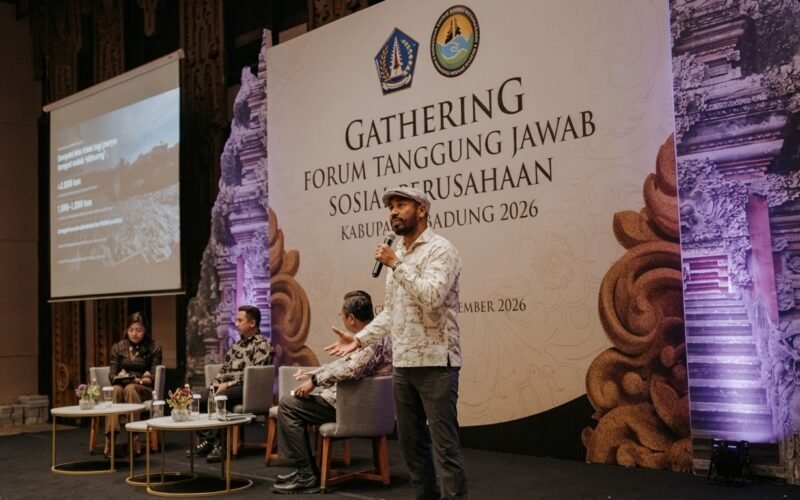
This coverage adds to the list of university visits to Cepaka Learning Center, following the groups from Universitas Terbuka and Universitas Udayana in October. This time, students came as content creators for their own generation.
For social foundations in Bali, working with media students opens a new way to reach a Gen Z audience, in language and formats they know. Facilities like CLC also show their role as educational tourism destinations that schools, universities, and communities can visit.
Closing Thoughts: Where Does Your Trash End Up?
The Udayana student coverage for UR-GENZ wrapped up its investigation with one message: think about where trash ends up, as well as where it’s thrown away.
Starting tomorrow, try flipping plastic packaging over before you throw it out and checking the number on the bottom. Set aside PET and HDPE bottles that can still be recycled, and cut down on sachets when a larger pack is available. To see that plastic path for yourself, Cepaka Learning Center is open for educational visits.