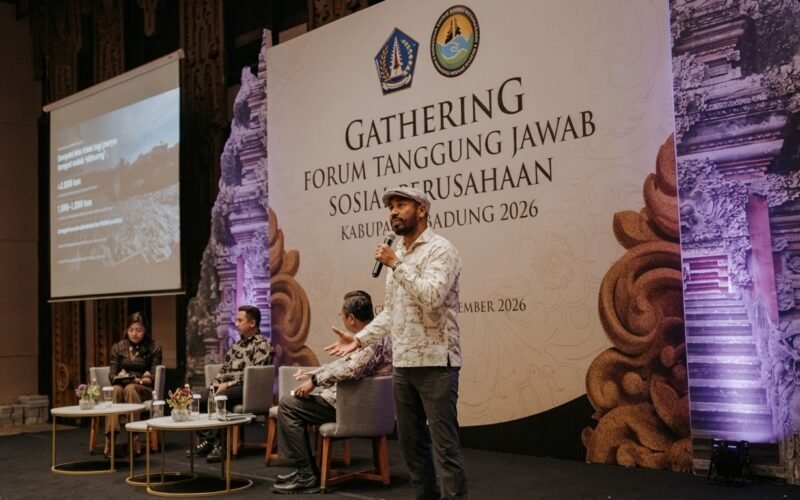
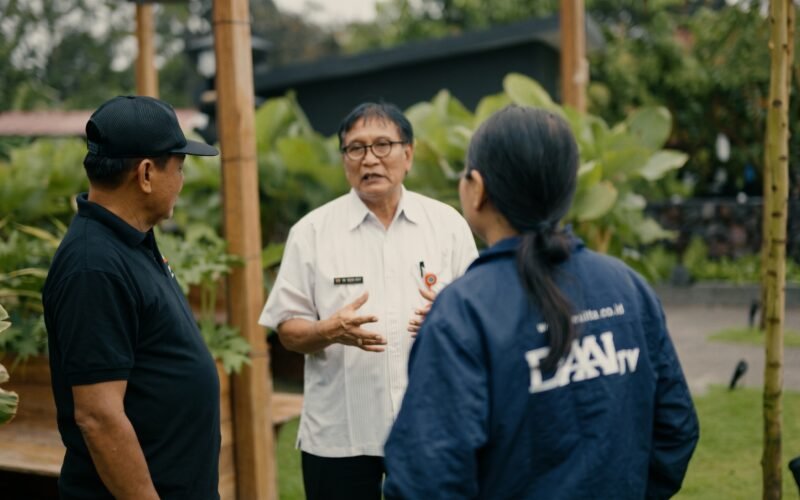
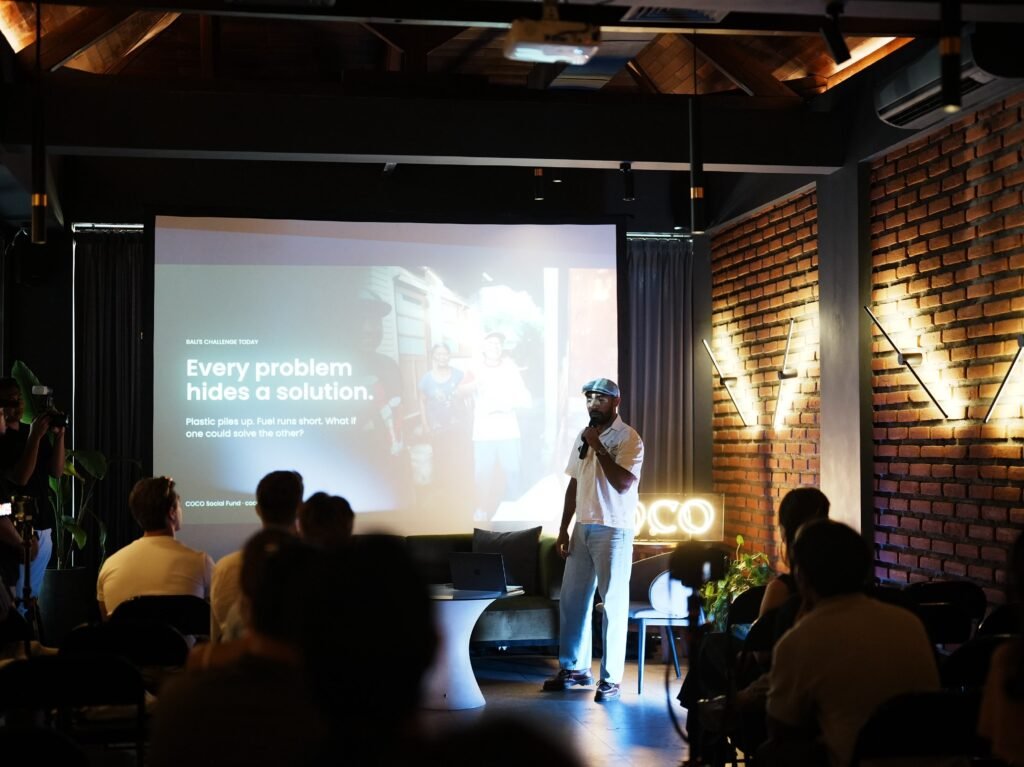
How did an environmental foundation in Cepaka Village end up turning plastic into diesel? That question shaped the story at Coco Talk, hosted by Coco Development on Friday, November 13, 2026. Frederick Ivander Christian Soukotta, known as Vander, Project Manager at COCO Social Fund, was the speaker. He covered how CSF began, the circular economy concept the foundation runs, and how it connects to Cepaka Learning Center and Kimnara Space.
Coco Talk: It Started With an Irrigation Channel
The first topic was where COCO Social Fund came from. According to CSF’s official website, the foundation began with the irrigation channels of Cepaka Village. Trash piling up in those channels caused flooding every rainy season, submerging roads and cutting off access between villages.
Today CSF’s work covers waste sorting with residents, processing non-recyclable plastic through pyrolysis, environmental education, and a range of community activities. All of it is rooted in the same village.
The direction is guided by the Tri Hita Karana philosophy: harmony between people and each other, nature, and the divine. On CSF’s website, these become three areas of work: environment (palemahan), people (pawongan), and culture and spirit (parhyangan).
The Circular Economy, COCO Social Fund Style
In a circular economy, waste is treated as material that can still be used again. In Cepaka, the concept runs in several stages.
Plastic from residents and from clean-up activities is sorted by the Cepaka Village BUMDes (village-owned enterprise) into seven categories: HDPE, LDPE, PS, PP, PET, PVC, and Other. Sorting decides which plastic can go into the machine, since some types contain substances that could damage it.
Selected plastic goes into the pyrolysis machine at Cepaka Learning Center. The machine heats it in a chamber with little or no oxygen, then condenses the vapor into diesel and gasoline. Data on CSF’s website at the time of writing records about 521 kilograms of plastic sorted, producing about 255 liters of diesel and 13.5 liters of gasoline.
The fuel goes toward village needs, such as waste-collection trucks and agricultural tractors. The black carbon residue is turned into resin crafts through the Waste to Worth workshop.
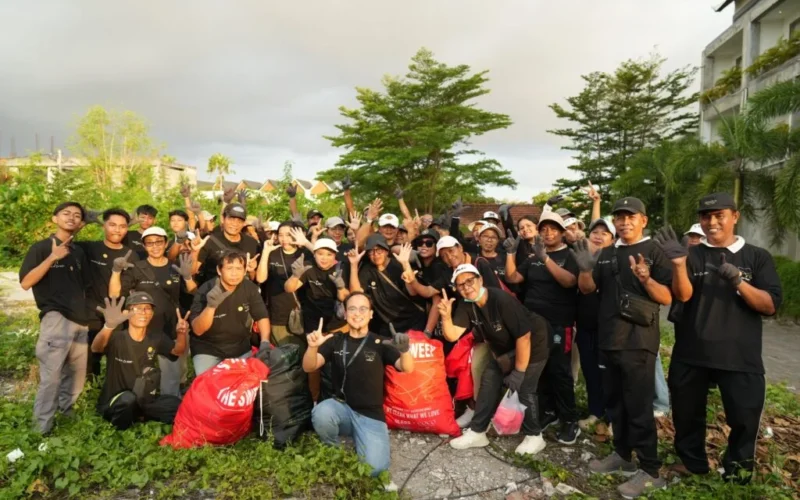
Read also: The Sweep IV: Over 500 Volunteers Sweep 10 Routes in Canggu and Collect 419.95 kg of Trash
How CLC and Kimnara Space Connect
Cepaka Learning Center and Kimnara Space are both in Cepaka Village, but they play different roles.
Cepaka Learning Center is both a processing site and a place to learn. This is where the pyrolysis machine runs, and where students, university groups, volunteers, and even journalists come to see the process.
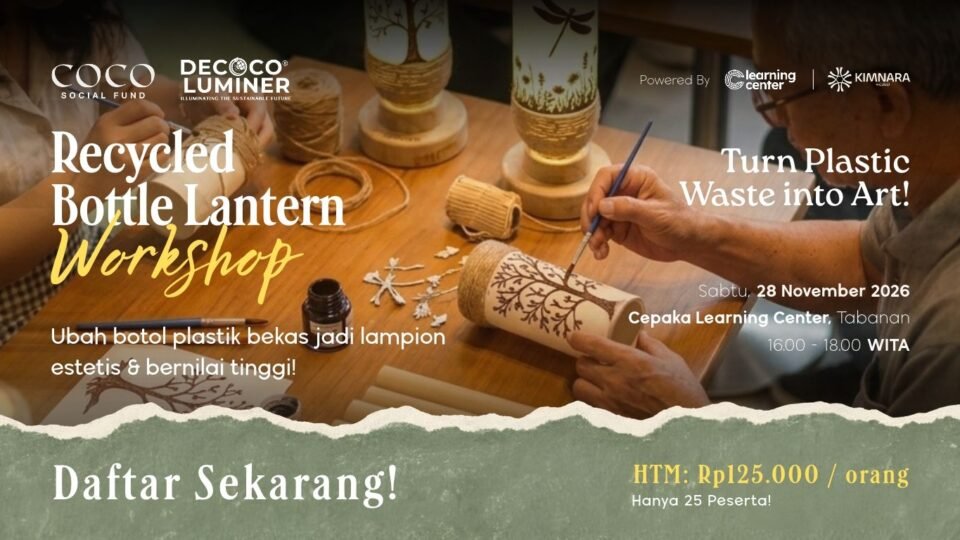
Kimnara Space is a community space with coworking, a café, and meeting areas overlooking the rice fields. Coco Development granted it to Cepaka Village, and it is managed jointly by the village administration and the customary village. Many CSF activities take place here or nearby, from teacher training and Petani Cilik walks through the surrounding rice fields to workshops open to the public.
The split is clear: CLC handles the waste and the technology, while Kimnara Space brings people together. That combination lets Cepaka Village work as an educational tourism destination: visitors can learn about waste processing at CLC, then gather and rest at Kimnara Space.
Value for Partners and the Community
Coco Talk gave the wider Coco Development family a chance to understand what the foundation under its group is doing. Hearing the story from the start, including the problem that sparked it, can help participants see how the programs connect.
For companies weighing a CSR program in Bali, this model shows a path that can be traced from waste to result. Other social foundations in Bali can also see how a program grew from a single village problem into broader community empowerment in Cepaka Village.
Closing Thoughts: From Irrigation Channel to Community Space
At Coco Talk, COCO Social Fund’s journey was traced from one local problem, irrigation channels clogged with trash, to the pyrolysis machine and community spaces that exist today.
If you’d like to understand the circular economy up close, start with one simple question at home: of the trash we throw away today, what could still be used again? To see an example firsthand, Cepaka Learning Center and Kimnara Space are open to visitors.