Pyrolysis theory can be studied from a journal, discussed in a lecture hall, or turned into thesis material. But there’s a limit only crossed by showing up in person, watching the machine run, and asking questions to the people operating it every day. That’s what drove the Universitas Warmadewa visit to Cepaka Learning Center, an academic step toward understanding up close how plastic waste turns into fuel.
Universitas Warmadewa isn’t an unfamiliar name in Bali’s higher education scene. The private university, established in 1984 in Denpasar, carries the motto Guna Widya Sewaka Nagara, loosely translated as devotion to the nation through science, technology, and art. The visit to Cepaka Learning Center stands as a concrete expression of that motto, bringing the academic world down to field practice.
Why Does a Campus Need to See Pyrolysis Firsthand?
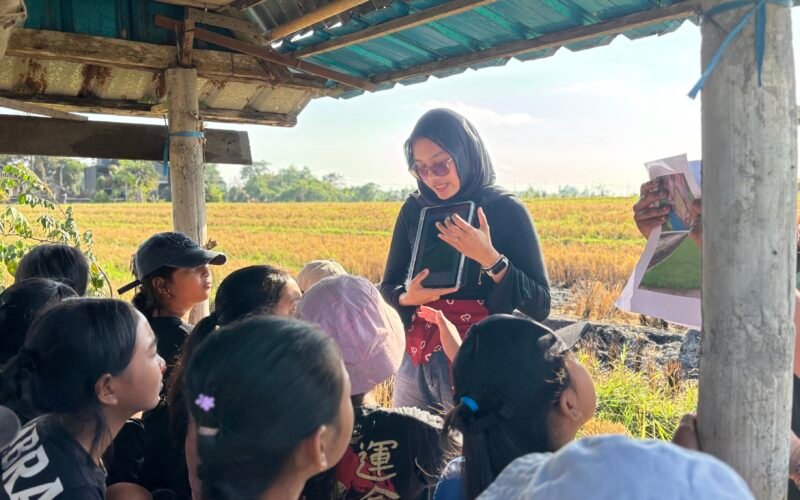
There’s a fairly wide gap between understanding pyrolysis conceptually and watching the process run for real. In a textbook, pyrolysis might only get explained through flow diagrams and chemical formulas. At Cepaka Learning Center, students and lecturers can watch firsthand as sorted plastic waste enters the reactor, undergoes heating without oxygen, then comes out as a liquid usable as alternative fuel.
Hands-on experience like this carries value hard to replace with other learning methods. Questions that come up in a classroom tend to stay abstract, something like “how does a pyrolysis reactor work.” But standing in front of the actual machine, those questions turn specific and technical, covering operating temperature, which plastic types process most efficiently, or how to handle leftover residue.
Cepaka Learning Center as an Open-Air Laboratory
The facility COCO Social Fund built in Cepaka Village keeps finding new functions. It’s no longer just a processing site for local residents’ waste. It’s also a learning space for educational institutions wanting to dig deeper into plastic waste processing technology. This kind of academic visit adds to Cepaka Learning Center’s growing role, which has previously welcomed visits from national research bodies like BRIN.
The relationship between a university and a waste processing facility such as this one runs both ways. Universitas Warmadewa gains access to a real case study that can enrich student research or thesis work. On the other side, Cepaka Learning Center gains input from an academic perspective the team working the field day to day might not have considered.
This kind of collaboration feeds into the broader educational tourism ecosystem taking shape in Cepaka Village. It’s not only middle school students coming through anymore. Universities are starting to see this facility as a reference worth studying in depth.
Read also: BRIN Visit Cepaka Learning Center: Research Meets Field
What Can Students Actually Learn From This Process?
Understanding plastic pyrolysis doesn’t stop at the machine’s technical side. There’s another layer of learning relevant to students from different backgrounds, from engineering, to environmental studies, to the social sciences.
Engineering students can study reactor efficiency and the technology’s development potential. Environmental students can examine this process’s impact compared to conventional waste disposal methods. Students from social science or communications programs have plenty to work with too, such as how this program managed to sustain community empowerment in Cepaka Village over time.
That range of perspectives is what gives a campus visit to a facility like Cepaka Learning Center more value than an ordinary facility tour.
For a social foundation in Bali running a technology-based program, a visit from academics brings a double benefit. The program’s reputation rises when a formal educational institution finds it worth studying, while also opening the door to longer-term research collaboration that could strengthen pyrolysis technology development going forward.
For any company or partner weighing a CSR program in Bali, this kind of partnership with an educational institution is worth taking as a model too. Supporting a facility like Cepaka Learning Center doesn’t only benefit the surrounding community. It also helps shape a generation of academics who understand the plastic waste problem from both theory and field practice.
Closing Thoughts: When the Classroom Meets the Field
The Universitas Warmadewa visit to Cepaka Learning Center shows that learning about plastic pyrolysis doesn’t have to stop inside a lecture hall. Watching the machine work, talking directly with the team operating it daily, and feeling the scale of the plastic waste problem on the ground offers an understanding hard to gain from reading alone.
Collaboration like this also sends a broader message. The plastic waste problem isn’t just the business of an environmental foundation or government. It’s a shared responsibility worth studying seriously by the generation of academics who’ll carry its solutions forward.