There’s something that settles the mind when hands slowly shape something without rushing. Mixing, pouring, waiting. That’s the feel running through the Waste to Worth workshop at Coco Lifestyle Resort, an event that brought the lifestyle resort world face to face with something usually considered far less glamorous: the leftover material from plastic pyrolysis.
The event came together through a collaboration between COCO Social Fund and Get Plastic, two organizations that have long worked on turning plastic waste into fuel through pyrolysis technology. This time, the focus shifted slightly, away from the fuel itself, toward the carbon residue typically left behind once the pyrolysis process wraps up, worked through a process that asked participants to slow down and stay present with each step.
What Is Waste to Worth?
The event’s name pretty much explains its mission: turning something considered waste into something with real value. In this workshop’s context, the “waste” in question is carbon residue, the solid black leftover that comes out of a pyrolysis reactor once plastic finishes converting into fuel.
That carbon residue often ends up as an extra waste stream needing its own disposal, ironic given that pyrolysis exists precisely to cut down on waste in the first place. Waste to Worth tries to break that cycle by finding a new function for the residue, instead of letting it become a fresh problem at the tail end of the process.
From Carbon Residue to Resin Flower Pots
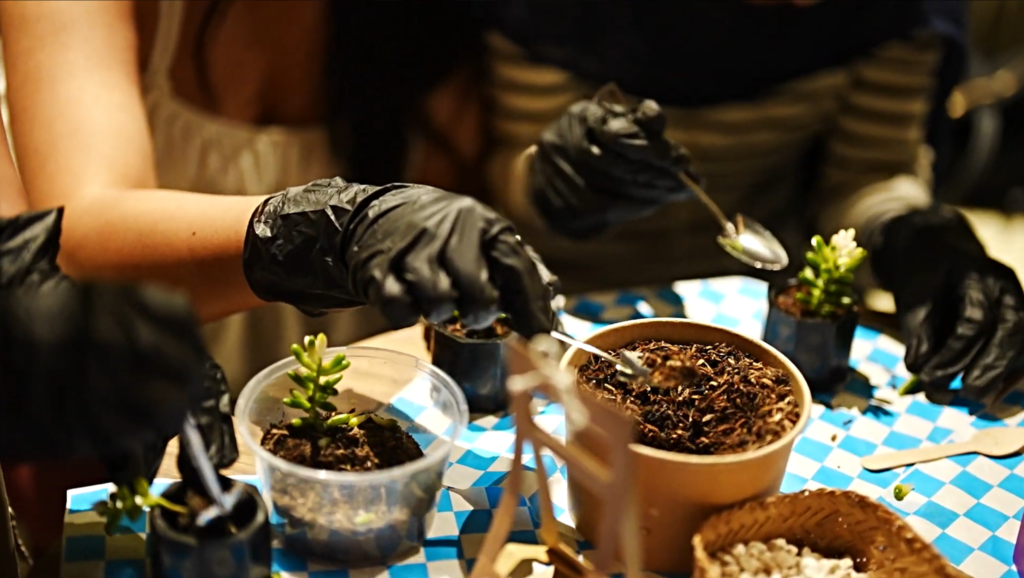
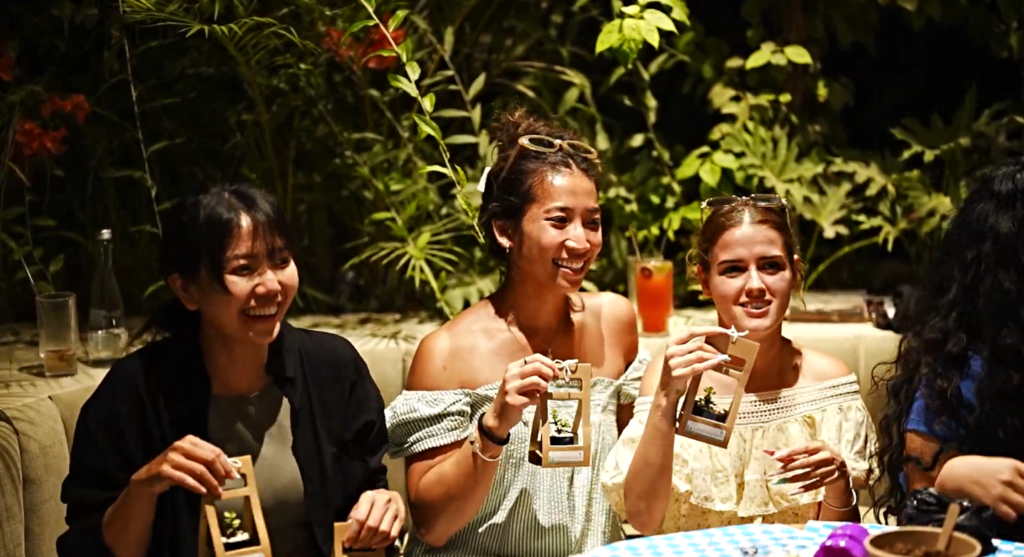
The core of this workshop centered on turning carbon residue into resin craft, specifically flower pots. Participants mixed carbon residue with liquid resin, poured it into molds, then waited for it to set before ending up with a unique flower pot carrying the natural black pattern left by the pyrolysis residue. A quiet pause sat between each stage, the waiting itself turning into one of the most valuable parts of the whole process.
Resin carries properties well suited to this kind of recycling. It binds solid particles like carbon residue while still producing a finish sturdy enough to hold up as a plant container. The black pattern that emerges from the carbon residue becomes its own aesthetic value, not just a marker that the material came from waste.
Participants who joined this workshop went home with something more than a souvenir. Their handmade flower pot stands as a physical reminder that plastic waste, even down to its final residue, still has a path toward becoming something useful.
Read also: COCO Social Fund Visit to Get Plastic: Learning Together
The Event Flow: Workshop, Games, and a COCO Social Fund Presentation
Waste to Worth didn’t stop at the flower-pot session. The event was structured in three parts, each carrying a different role in delivering the bigger message behind it.
The first part was the workshop itself, where participants got hands-on with mixing, pouring, and shaping flower pots from carbon residue and resin. That hands-on format meant participants didn’t just hear a story about recycling. They felt the process with their own hands.
Once hands were done crafting, the event moved into a games session. Activities like this usually work as a refreshing pause, while also helping participants from different backgrounds get to know each other before moving into a more serious part of the program.
The event closed with a presentation on COCO Social Fund, the programs the foundation runs, and how Waste to Worth fits into a larger effort to manage plastic waste in Bali. Placing this session last makes sense psychologically. Participants who just experienced turning waste into a handmade object firsthand tend to be more receptive to the bigger story behind it, compared to hearing a presentation upfront before they’ve had any hands-on experience at all.
Why Coco Lifestyle Resort Was the Right Venue
Choosing a lifestyle resort as the venue for an environmental workshop might sound unusual at first glance. But that’s exactly where the smart part of this choice lies. Coco Lifestyle Resort, with its modern setting and a guest base more open to new lifestyle ideas, offers a fitting space to introduce sustainability themes to an audience that might never have encountered stories about pyrolysis or plastic waste processing before.
The relaxed resort atmosphere also makes a fairly technical topic, like carbon residue and the pyrolysis process, easier to take in. Not a stiff environmental seminar, but a relaxed afternoon that happened to carry an important message about waste processing.
The collaboration between COCO Social Fund and Get Plastic behind Waste to Worth also offers an interesting example for any company or partner weighing a CSR program in Bali. Rather than holding a conventional donation event, this kind of cross-foundation collaboration shows environmental education can be packaged as an enjoyable experience, not a lecture that feels preachy.
A creative workshop format like this also has the potential to reach a wider audience than conventional outreach. Participants who go home with a flower pot they made themselves are likely to tell others about the experience, extending Waste to Worth’s reach well beyond the room where the event took place.
Closing Thoughts: New Value From What’s Left Behind
Waste to Worth at Coco Lifestyle Resort shows that plastic waste management doesn’t have to stop at the fuel stage. Even the final residue from the pyrolysis process, something long considered useless, turns out to still hold potential as a flower pot with both aesthetic and functional value.
The collaboration between COCO Social Fund and Get Plastic through this event drives home something simple: almost no waste reaches a dead end. There’s always a way to give it a second chance, as long as someone’s willing to look for it, and Waste to Worth stands as one creative answer to that search.