A garbage truck in Cepaka Village usually only runs when its tank has diesel. Now, part of that diesel comes from plastic waste that once just piled up at the dump. COCO Social Fund calls it free diesel from plastic waste, a result of the pyrolysis process the foundation has been running for some time now.
This isn’t a big story with dazzling numbers. But it’s real, and its impact reaches residents who work with garbage trucks or farm tractors every day.
Free Diesel from Plastic Waste, More Than Just a Slogan
Some people see plastic waste as a problem hard to solve. COCO Social Fund chooses a different lens:
” Some see plastic waste as a problem. We try to see it as an opportunity. “
That line isn’t just a campaign tagline. The foundation actually turns hard-to-recycle plastic waste into liquid fuel, then distributes it free of charge to meet residents’ needs in Cepaka Village.
From Pyrolysis to a Garbage Truck’s Tank
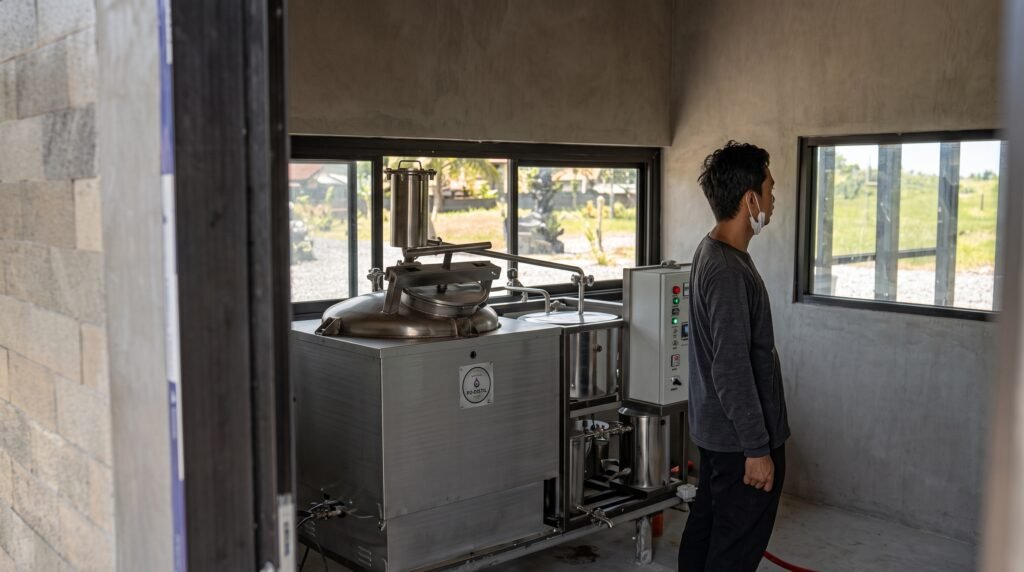
The process starts with plastic waste that resists decomposition and often ends up at the final dumping site. Through pyrolysis technology, that plastic transforms into a liquid fuel similar to diesel. Cepaka Village’s garbage truck, which usually eats into its own fuel budget, can now fill its tank with this processed fuel at no extra cost.
Free Fuel for Garbage Trucks and Farm Tractors in Cepaka Village
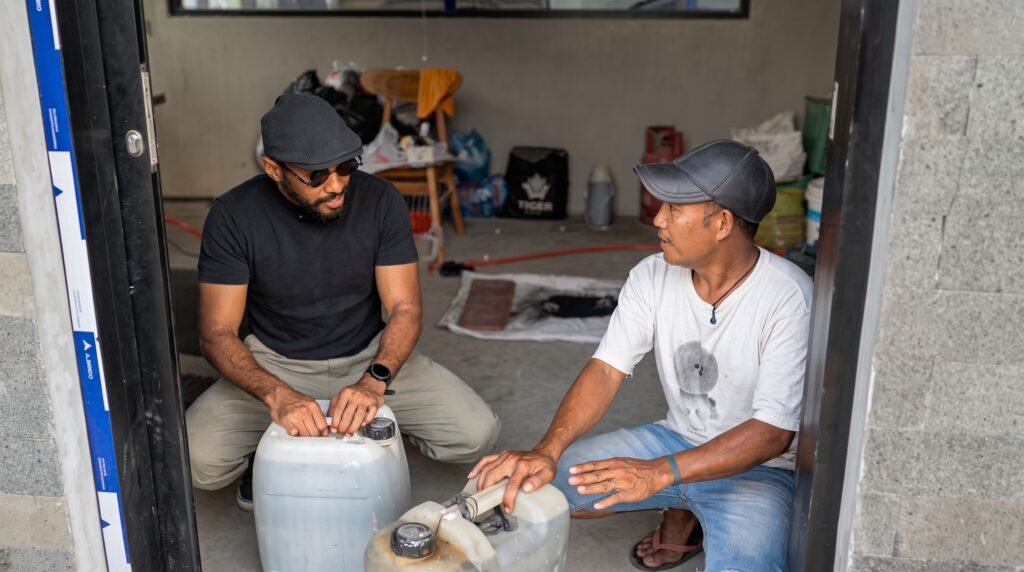
The benefits of free diesel from plastic waste don’t stop at garbage trucks. COCO Social Fund also distributes this fuel to farm tractors owned by Cepaka Village residents. Two seemingly different needs end up getting help from the very same solution.
When Waste Helps the Harvest
Planting season usually carries a heavy operational cost, especially for tractor fuel. With recycled plastic diesel now available, part of that burden eases. Cepaka Village farmers no longer carry the full fuel cost of plowing their fields, while plastic waste that once burdened the environment turns into part of daily farming solutions instead.
A Bali Social Foundation Turning Problems Into Opportunities
COCO Social Fund is known as a social foundation in Bali focused on plastic waste-to-fuel processing, environmental education, and various forms of social assistance. This free diesel program stands as clear proof of how these three focuses can meet within a single activity.
When waste that’s hard to recycle can give something back to the community, waste management stops being just about disposal. It becomes about creating new solutions for residents’ everyday needs.
Empowering Cepaka Village’s Community Through Fuel
Empowering Cepaka Village’s community through this program feels different from typical social assistance. Residents don’t just receive a one-time handout. They feel the benefit repeatedly, every time a garbage truck runs or a tractor heads out to the fields. This kind of support fits more naturally into the village’s daily needs.
CSR Programs in Bali That Can Start From Something Simple
This free diesel story also appeals to companies looking for CSR programs in Bali with a concrete, easy-to-grasp approach. Not every CSR contribution needs a huge budget or a complicated project. Sometimes, supporting an already-running plastic waste-to-fuel processing effort delivers impact that people feel much faster.
The steps are still small, and the journey still runs long. But every liter of free diesel from plastic waste produced proves that waste doesn’t always have to end up at the final dumping site.
Closing Thoughts: Free Diesel from Plastic Waste and Small Steps That Matter
Free diesel from plastic waste may not solve Bali’s entire waste problem just yet. But through garbage trucks and farm tractors in Cepaka Village, COCO Social Fund shows that an environmental problem can turn into real benefit, little by little, one liter at a time.