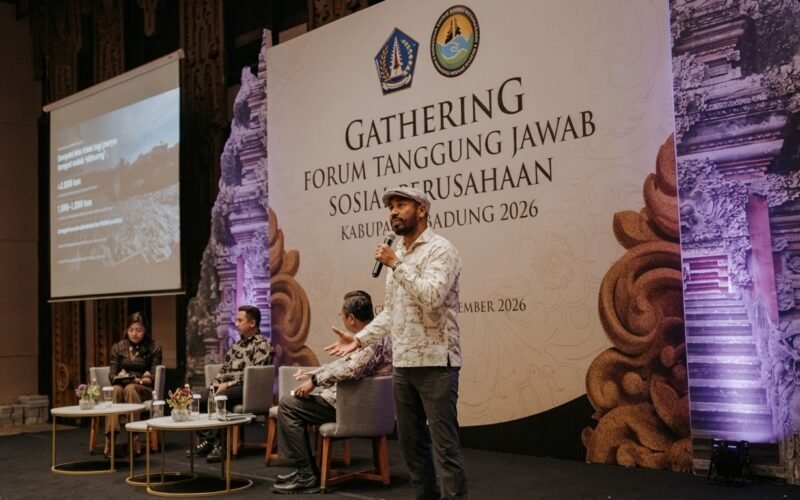
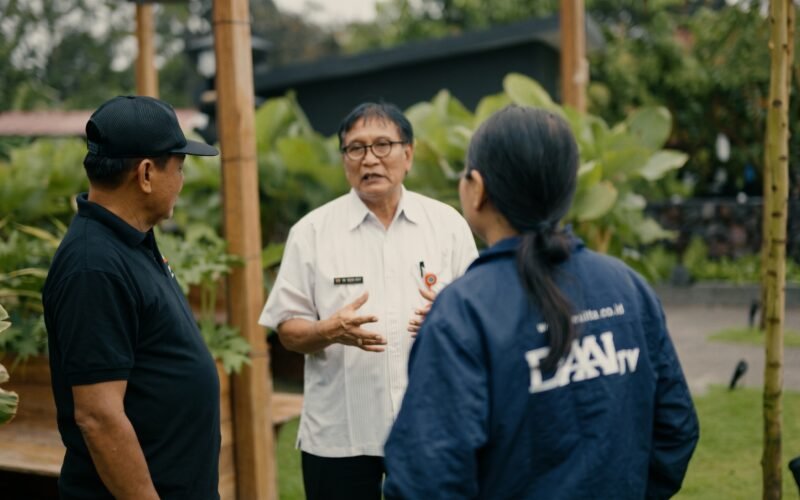
Last month, fuel queues stretching from many gas stations showed just how heavily Bali leans on private vehicles. On Thursday, November 5, 2026, that dependence was discussed with a longer-term view at Kompas.com Talks Udayana, a discussion titled “The Future of Bali Transport: Toward Sustainable Mobility” at the Lecture Building Hall on the Bukit Jimbaran campus. At Kompas.com’s invitation, the COCO Social Fund team was among the attendees.
Bali and Its Dependence on Private Vehicles
Statistics Indonesia (BPS) data presented at the forum recorded 5.5 million registered motor vehicles in Bali in 2025, around 4.76 million of them motorbikes. Bali’s population sits at around 4.2 million. In other words, there are now more vehicles than people, and roughly 86 percent of those vehicles are motorbikes.
The forum presented estimates of economic losses from congestion reaching hundreds of trillions of rupiah a year, not counting the impact on health and quality of life. On the environmental side, WRI Indonesia data shows the transport sector contributed around 41 percent of Bali’s emissions in 2024, second only to the energy sector.
Voices From the Kompas.com Talks Udayana Stage
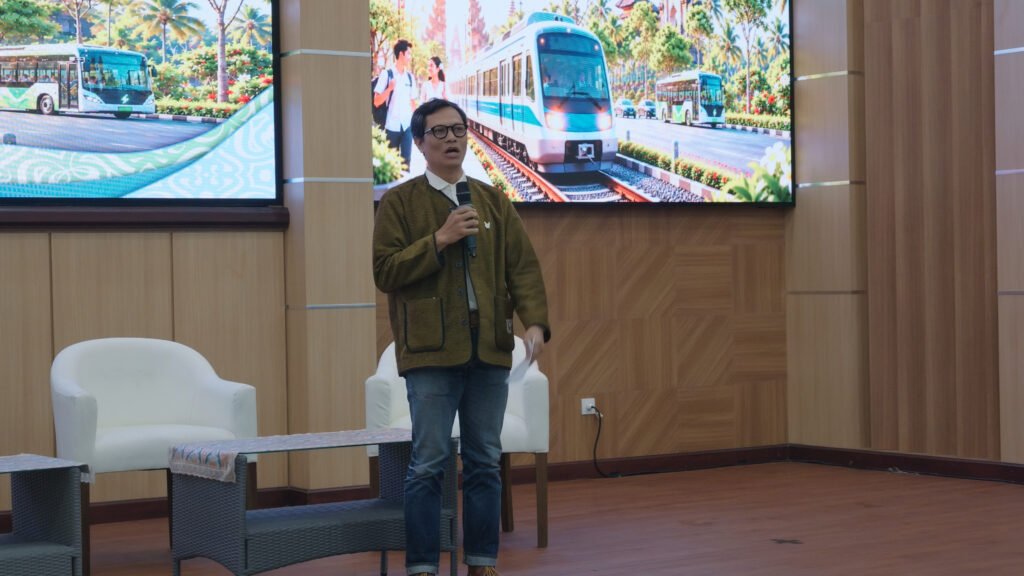
Moderated by Wisnu Nugroho, the discussion brought together speakers from central government, a transport operator, a research institute, and the university.
Dail Umamil Asri, Director of Connectivity and Logistics Infrastructure at Bappenas, laid out a sustainable urban mobility plan for the Sarbagita area. Its backbone is a quality transit network of 345.2 kilometers across 28 routes, supported by low-emission zones and transit-oriented development.
I Gede Darmayusa of PT KAI said the company is ready to build mass transit in Bali, including to ease congestion on the way to the airport. The condition is that regional government must play a part, at minimum by providing land. He also noted that the need for public transport usually only comes to the surface during a mobility crisis.
Universitas Udayana academic Komang Adi Sastra stressed that Bali needs integrated public transport. Its planning should align with local culture and wisdom, and be built through dialogue among government, operators, academics, businesses, and the community.
The Biggest Challenge Lies in Habits
The speakers agreed that Bali needs an overhaul of its transport system through integrated, reliable, and affordable public transport. The biggest obstacle lies in the habits of residents and tourists who have long relied on private vehicles.
The forum stayed optimistic. Jakarta’s MRT and LRT were cited as examples: they faced resistance at first and have since changed how residents get around.
COCO Social Fund’s Role at Kompas.com Talks Udayana
Day to day, COCO Social Fund deals with waste, environmental education, and community work in Cepaka Village. At a transport forum, that work still has its place.
In Cepaka Village, CSF runs the processing of plastic waste into alternative fuel through pyrolysis. CSF itself acknowledges that the machine’s effectiveness, the fuel quality, and the handling of carbon residue are still being proven. Questions like these are best answered through research. A forum at Universitas Udayana opens an opportunity for synergy with the university to test them scientifically. A Universitas Udayana group had already visited Cepaka Learning Center on October 20 to study the process.
CSF’s relationship with Kompas.com didn’t start at this forum. Earlier, the two ran the Re-Cap Workshop, which turned used bottle caps into keychains. Its message fits the spirit of the transport discussion: protecting the environment and applying the circular economy doesn’t always need big technology, and it can start with simple steps.
As a local social foundation, CSF brought a community perspective into a room filled with policymakers and operators. In short, Bali’s economic and tourism growth needs to go hand in hand with better waste governance, so the burden of environmental damage isn’t passed on to the next generation.
The link to transport is clear. Transport emissions are an environmental problem too, just like plastic waste, and the October fuel shortage showed how fragile mobility built on gasoline can be. At the time, CSF went out to gas station queues handing out drinks and nasi jinggo to drivers. The presence of the Majelis Desa Adat (customary village council) at the same forum also showed that Balinese cultural preservation is part of the conversation around transport planning.
Value for Partners and the Community
The forum drew a wide range of attendees, from Angkasa Pura Indonesia, a special staff member of the Bali governor, and the Majelis Desa Adat, to a taxi community and the hospitality industry. Companies weighing a CSR program in Bali can see transport as an issue that touches employees, guests, and residents at once. Social foundations in Bali also find it easier to grasp the issues affecting the communities they work with through cross-sector forums.
Closing Thoughts: Lighter Mobility Starts With Small Choices
Kompas.com Talks Udayana showed that the future of Bali transport needs infrastructure, financing, and a change in habits all at once. That last part is something anyone can start on.
For daily trips, try combining several errands into one outing, sharing a ride with colleagues or neighbors, and walking or cycling for short distances. Small steps like these don’t replace mass transit, but they help cut the number of vehicles on the road while the system gets built.