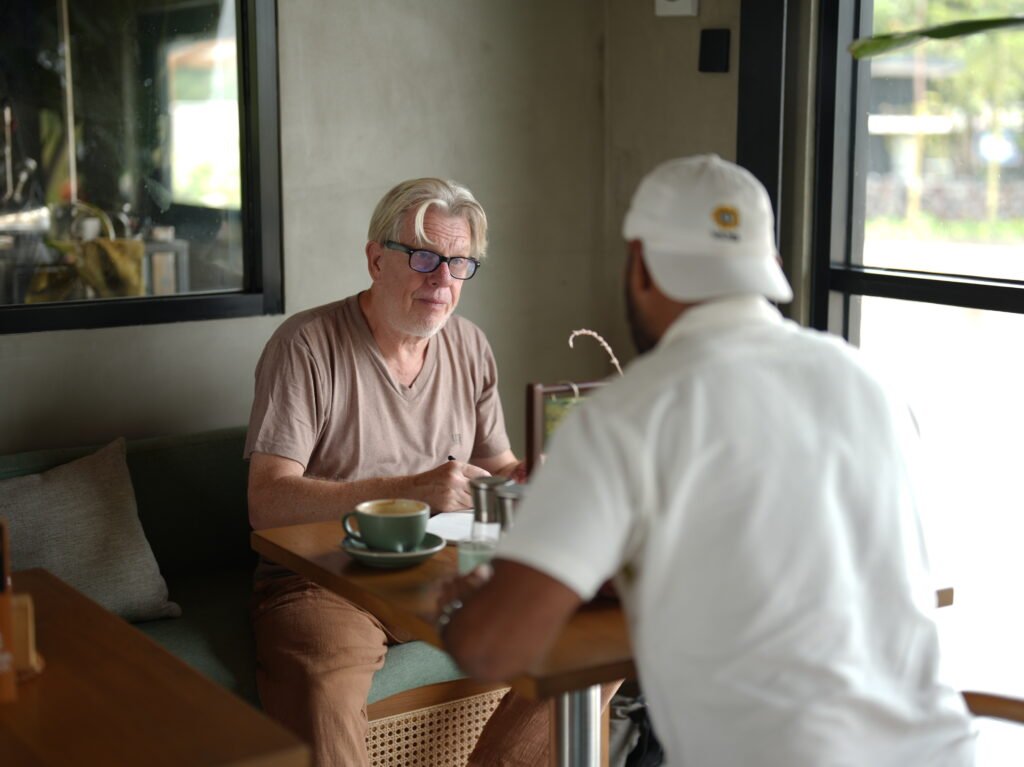
Bali’s fuel shortage in October 2026 turned out to be heard all the way in the Netherlands. A journalist who covers Southeast Asia for media there contacted COCO Social Fund after reading about turning plastic waste into oil, then came in person to Cepaka Village. This Dutch journalist visit shows that a story from a village in Tabanan is getting attention beyond Bali.
Why a Dutch Journalist Came to Cepaka
In an email to CSF, the journalist gave two reasons: the petrol crisis Bali was going through that month and the island’s plastic waste problem. Turning plastic into oil, in the journalist’s view, touches both at once.
The context was busy. Since around October 11, 2026, fuel queues stretched at a number of gas stations across Bali, reportedly reaching two kilometers in Karangasem. At the Bali governor’s request, an odd-even license plate rule was then applied to Pertalite purchases.
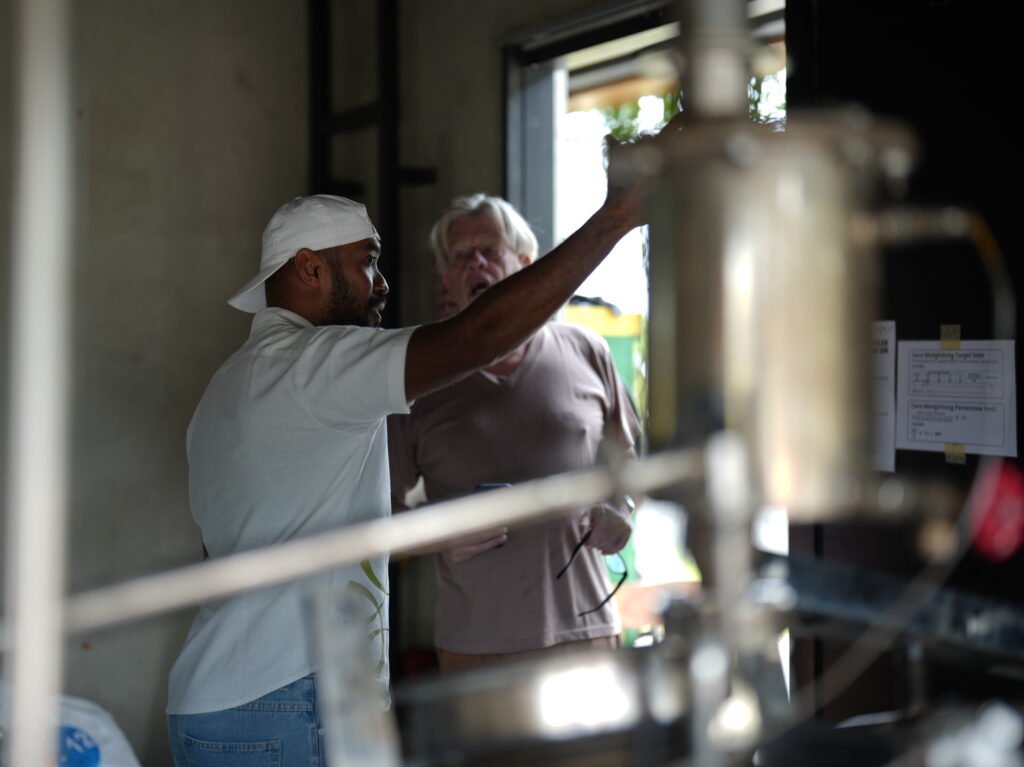
What the Journalist Wanted to See: The Machine and the Village
The journalist came to see the pyrolysis machine, to see the village where processing takes place, and to interview the COCO Social Fund team.
Processing in Cepaka does run in the middle of village life. The flow starts with the BUMDes (village-owned enterprise) sorting plastic into seven categories. Clean, dry plastic is then heated in a reactor with little or no oxygen, until the vapor condenses into liquid fuel. What’s left is black carbon residue.
The Scale, Seen as It Is
The spotlight on the fuel crisis can easily make pyrolysis sound like an answer. The reality is smaller. During the June 2026 trial, 10 kilograms of plastic yielded about eight liters of diesel and 550 milliliters of gasoline over four to five hours. Cumulative data shown on CSF’s website at the time of writing records about 515 kilograms of plastic sorted, 243 liters of diesel, and 12.8 liters of gasoline.
Those figures are nowhere near Bali’s fuel needs. The Cepaka village head himself describes the facility as an innovation and a pilot model. Its value lies in the example it offers: how a village sorts its waste, turns part of its plastic into fuel, and stays open to scrutiny.
What Media Attention Means for Cepaka Village
This visit adds to the list of people coming to see for themselves. Over the past few weeks, Cepaka Learning Center has welcomed junior high students, including exchange students from Germany, as well as students from Universitas Terbuka and Udayana. Now it’s media from Europe.
Media coverage carries the village’s story to a wider readership and brings critical questions with it. Both fit COCO Social Fund’s commitment to openness to evaluation. Other social foundations in Bali can see how that openness can build trust. Companies weighing a CSR program in Bali also get an example of a program ready to be examined by outsiders, journalists included.
Closing Thoughts: Reading Waste-to-Fuel News Carefully
The Dutch journalist visit shows that community empowerment in Cepaka Village through waste management is now drawing attention from foreign media. That attention also calls for an honest story, including about the scale.
If you read news about plastic waste being turned into fuel, wherever it is, three questions are worth asking. How big is the scale? What type of plastic is processed? Where does the residue go? Those three answers help separate a pilot project from an overblown claim.