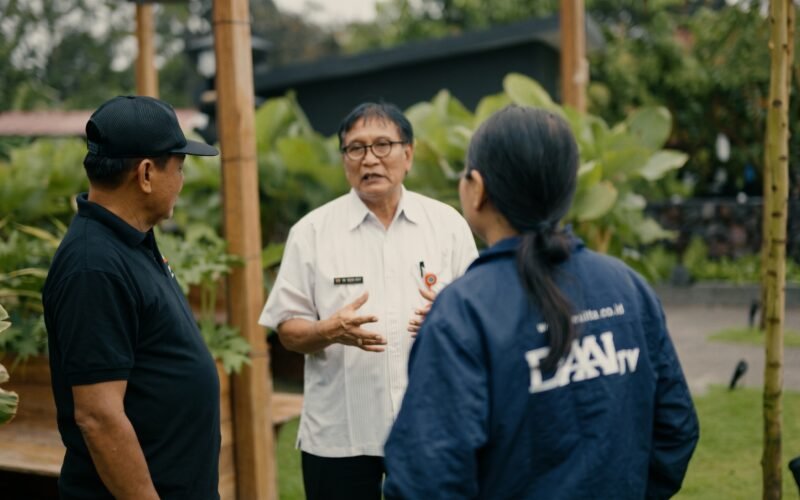
Fuel is scarce in Bali. Since around October 11, 2026, queues have stretched at a number of gas stations, reportedly reaching two kilometers in Karangasem, with residents waiting for hours for a few liters of gasoline. Amid the spotlight on fuel supply, the Open University and Udayana visit to Cepaka Learning Center took place on October 20, 2026.
Pyrolysis is usually boiled down to one sentence: plastic waste into fuel. For a campus that wants to understand what happens between “waste” and “fuel,” that one sentence isn’t enough. Universitas Terbuka (the Open University) and Universitas Udayana came to learn in more detail how the process runs.
The scale deserves to be seen as it is. During the trial period, 10 kilograms of plastic yielded about eight liters of diesel, nowhere near Bali’s fuel needs. Pyrolysis in Cepaka is one direction for alternative fuel that’s still being studied.
Open University and Udayana Visit: Two Campuses, Two Backgrounds
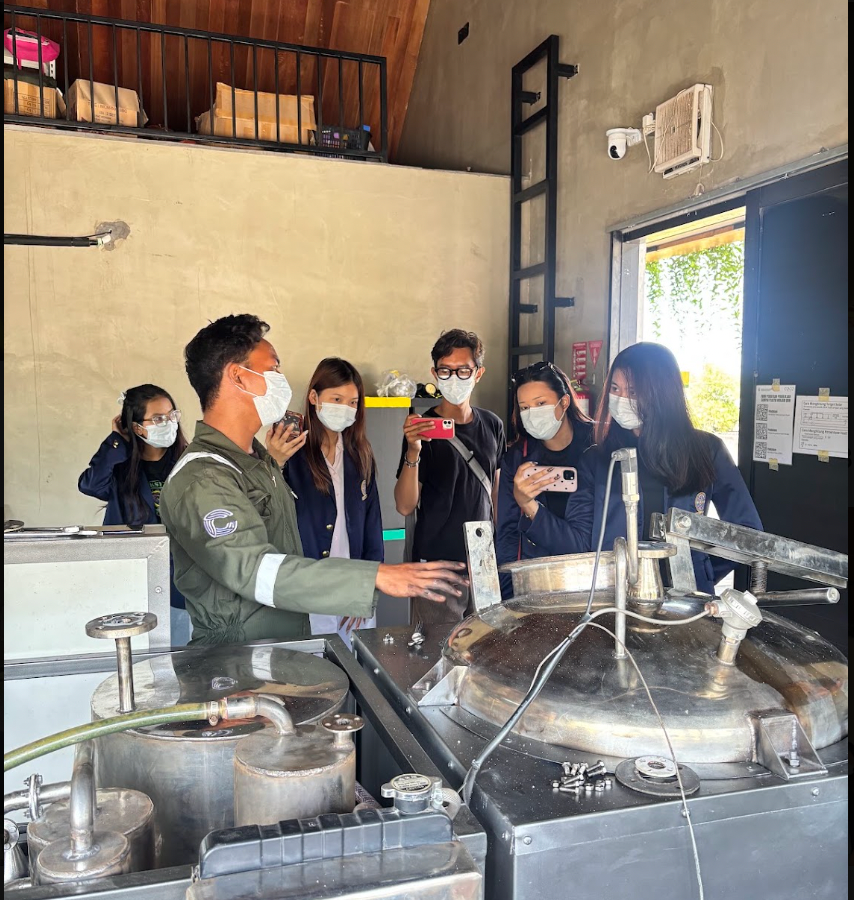
Universitas Udayana was formally established on August 17, 1962, and is the oldest public university in Bali. Its Bukit Jimbaran campus sits in Badung. Universitas Terbuka comes from a different background: a public university founded in 1984 under the motto of making higher education open to all, serving students through distance learning. Two campuses with different characters came to the same facility.
The Pyrolysis Flow in Cepaka, From Sorting to Diesel
In general terms, this is the flow run in Cepaka Village. The figures below come from June 2026 reporting, when the facility was still in its trial phase.
Waste management is centralized at Cepaka Village’s BUMDes (village-owned enterprise), which sorts plastic that meets the criteria before it’s processed. Plastic is divided into seven categories: HDPE, LDPE, PS, PP, PET, PVC, and Other. Optimal fuel production is supported only by clean, dry plastic, and PVC and PET are screened out so they don’t enter the machine.
Selected plastic goes into the reactor and is heated through pyrolysis, a chemical decomposition that happens without burning. One run takes four to five hours. During the trial period, 10 kilograms of plastic yielded about eight liters of diesel and 550 milliliters of gasoline.
Besides diesel and gasoline, the process leaves black carbon residue. The diesel has been tried on a local farmer’s tractor and worked without technical problems. The carbon residue is turned into resin crafts in the Waste to Worth workshop, with souvenirs planned next. The fuel produced is also given free to residents, for example to run waste-collection trucks and agricultural tractors.
Read also: Grand Opening Cepaka Learning Center: Doors Open, Proof Still in Progress
Questions Still Open, and the Role of Campuses
The Cepaka village head has described the facility as an innovation and a pilot model. COCO Social Fund itself acknowledges that the machine’s effectiveness, the quality of the fuel, and the handling of residue are still being proven.
That’s where campuses can come in. How much oil each type of plastic yields, how good the fuel is, or where the carbon residue is best used: research usually answers all of these. Understanding the process first can be an early step before any of it gets tested.
Value for the Foundation and Partners
Cepaka Learning Center has previously received a visit from Universitas Warmadewa, and BRIN has also requested a visit. Now Universitas Terbuka and Udayana have come too. The run of visits shows the facility is open to being examined from many angles, in line with COCO Social Fund’s commitment to openness to evaluation.
For a social foundation in Bali running a technology-based program, opening up to campus scrutiny can strengthen the program’s credibility. For any company weighing a CSR program in Bali, a partnership with educational institutions opens the possibility that its support gets tested and studied too. Open to the public since September 26, Cepaka Learning Center also forms part of the educational tourism in Cepaka Village.
Closing Thoughts: One Sentence, Many Questions
The Open University and Udayana visit shows pyrolysis deserves a closer look than its one-sentence summary. Each stage, from sorting to residue, holds questions that can be answered.
If you’d like to contribute, start with the plastic packaging at home. Look at the number on the bottom of the packaging: codes 1 to 7 mark the type of plastic. PET (code 1) and PVC (code 3) aren’t processed in the Cepaka machine, while HDPE (2), LDPE (4), PP (5), PS (6), and Other (7) fall into the categories that get sorted. Keep clean, dry plastic apart from wet waste.