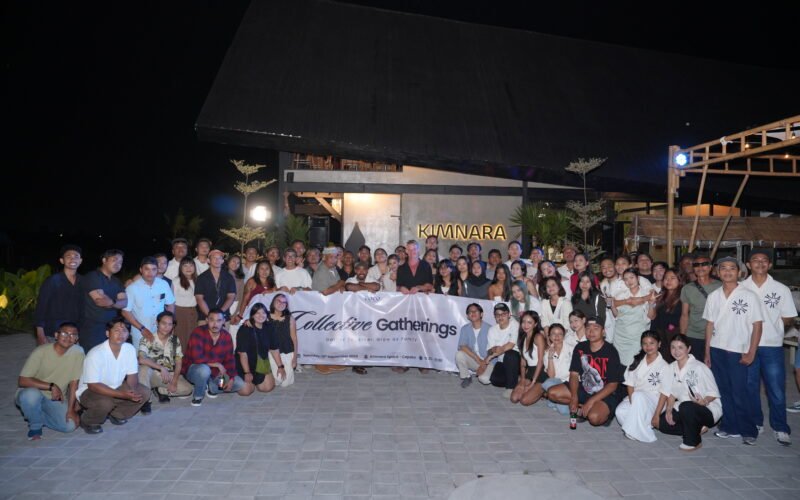
It’s already been cleaned twice before. Yet on September 19, 2026, the same team returned to the streets and shoreline of Canggu for exactly the same task: picking up plastic waste that somehow keeps showing up again. That’s THE SWEEP Bali’s third edition, and the fact that this spot needed cleaning a third time is the most interesting part of the story.
THE SWEEP: A Clean Day Across Bali, COCO Social Fund’s ongoing initiative, has now run three times. From Batu Bolong Beach to the surrounding streets, volunteers gathered dozens of kilograms of plastic waste in a single day. The number lands smaller than the previous edition. The work stayed just as heavy.
It’s a fair question: if less waste got collected than last time, does that signal the program is losing steam? The opposite is closer to the truth. The volume of waste collected in one cleanup isn’t the only measure of success. Running this event three times in a row, on schedule, is a far more telling signal.
A cleanup that only happens once tends to fade the moment social media attention moves on. THE SWEEP Bali’s third edition shows the opposite. The calendar stays fixed. Hashtags come and go, but the event keeps happening.
Canggu and Batu Bolong Beach: Same Location, Same Recurring Challenge
Returning to Canggu and Batu Bolong for this third edition wasn’t a coincidence. The area keeps growing fast, and that growth always brings a consequence rarely mentioned in tourism marketing: waste volume climbing faster than the capacity to manage it.
The fact that the same location still needs cleaning a third time is itself worth noting. On the surface it sounds like failure: if it’s been cleaned twice already, why is it dirty again? The answer is simple and a little uncomfortable. Plastic waste in a tourist area like Canggu isn’t something one cleanup solves. It takes repetition, a regular presence, and patience with the reality that waste keeps reappearing as long as the source of the problem hasn’t been fully addressed.
Read also: THE SWEEP Bali: How 206.25 Kg of Canggu Plastic Became Alternative Fuel
From Canggu’s Streets to Cepaka Learning Center’s Pyrolysis Reactor
Just like the two editions before it, the collected waste didn’t stop at the collection truck. Everything went to Cepaka Learning Center, where hard-to-recycle plastic gets processed through pyrolysis technology into alternative fuel.
There’s real value in a workflow that’s already run three times. The team handling sorting and processing at Cepaka Learning Center has grown more familiar with the type and volume of waste coming out of Canggu. That experience makes the pyrolysis process run more efficiently than it did during the first edition, when everything was still new.
That kind of routine also makes evaluation easier. The team can compare processing results across editions, spot patterns in the waste that shows up most often, and adjust sorting strategy based on data that keeps growing with each event.
An Upstream-to-Downstream Collaboration That’s Maturing
THE SWEEP Bali has always emphasized one principle: managing plastic waste takes collaboration from upstream to downstream. Upstream means awareness among residents and tourists to cut plastic use in the first place. The middle covers collection and sorting in the field. Downstream handles final processing through pyrolysis at Cepaka Learning Center.
By the third edition, that flow feels increasingly settled. Volunteers showing up aren’t all first-timers hearing about THE SWEEP for the first time. A good share are now repeat participants who genuinely understand why the event matters. That kind of trust doesn’t build overnight, and its payoff only shows once a program has run long enough.
Value for Social Foundations in Bali and CSR Partners
For other social foundations in Bali running similar environmental programs, THE SWEEP Bali’s third edition offers a real example of why long-term consistency matters more than chasing a big number at every single event. A program that survives three editions builds more confidence with prospective donors or partners than a one-off event with dramatic results that never continue.
For any company or partner weighing a CSR program in Bali, getting involved in a recurring event like this offers something more measurable. Support can be evaluated edition by edition, impact can be compared over time, and results can be reported with growing data, rather than a single story from one activity whose staying power is hard to gauge.
Closing Thoughts: Dirty Again Doesn’t Mean Failure
THE SWEEP Bali’s third edition closes out this year’s run with a simple message. The most meaningful cleanup is rarely the one that makes the most headlines. It’s the one that keeps showing up. Canggu and Batu Bolong Beach will likely need cleaning again at the next edition. That’s not a sign of failure. It’s a reminder that plastic waste demands long-term patience, not an instant fix.
As long as waste keeps appearing on Bali’s streets and shorelines, a fourth edition, a fifth, and beyond will likely follow. That’s really where COCO Social Fund’s consistency shows itself: returning again and again, edition after edition, until the habit of caring for the environment takes root in the area they’ve committed to protecting.